In 1944, under the guidance of Operation Ichi-Go, the Japanese army launched the Henan-Hunan-Guangxi Campaign, advancing triumphantly and sweeping aside all resistance. Even Changsha, which had held off the Japanese three times before, fell on the evening of June 18. Lieutenant General Isamu Yokoyama, commander of the Japanese Eleventh Army, ordered the 68th and 116th Divisions to advance toward Hengyang along both banks of the Xiang River, hoping to seize the city and destroy Hengyang Airport within three days. They never imagined that Hengyang would become a bloody meat grinder for the Japanese, or a nightmare that would haunt countless Japanese soldiers forever.
Over 47 days and nights, they witnessed for the first time just how tenacious and fearless Chinese soldiers could be, how the Chinese people could unite as one and stand together, putting aside all thoughts of personal gain and safety. They also saw the wisdom of a people nurtured by a civilization with 5,000 years of history.
By August 7, the Japanese had breached the core defensive positions. The defenders were divided among several isolated strongholds in the city, cut off from one another and unable to organize an effective counterattack.
By 8 p.m. on the night of August 7, after conferring with division commanders including Zhou Qingxiang, our Tenth Army commander Fang Xianjue decided to negotiate with the Japanese, in order to spare Hengyang's more than 20,000 civilians and the Tenth Army's over 7,000 wounded soldiers the fate of Nanjing.
At dawn on August 11, Liu Hao, Li Yishui, the Fake Monk, Taozi, and Chen Yun crawled out through an underground passage, blended in with the refugees, and escaped Hengyang.
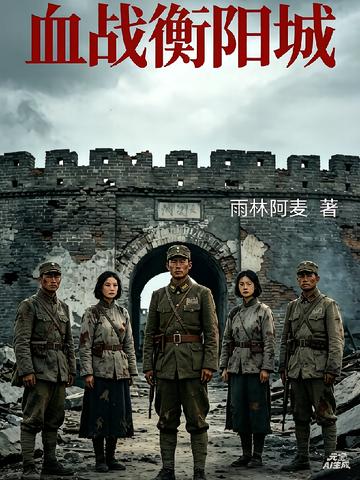
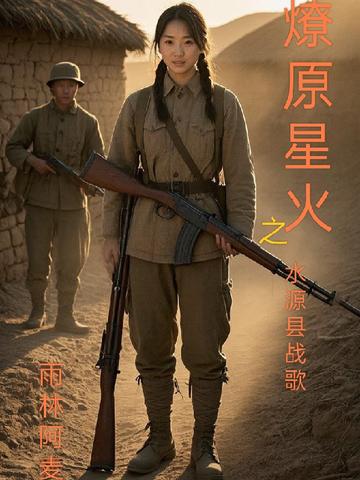
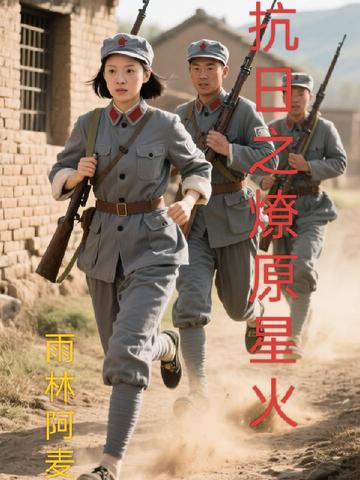
I just watched it a little bit, and it feels like it describes the scenes of resistance against Japan in Hunan very realistically. The Battle of Changde, the Battle of Changsha, the Battle of Hengyang, and the Battle of Xuefengshan finally led to Zhijiang accepting the surrender of the Japanese army.
The story has a background, the characters are real, and the plot is brilliantly performed.
The soldiers who defended Hengyang were brave
The plot of the story is twists and turns, bizarre and touching, the characters are well portrayed and very vivid, it is worth reading!
Many thanks to the author. The story is vivid, rich in content, crisp in interpretation, and deeply touching.
The content is pretty good, although some of the things described are outrageous, but nothing serious.
Not bad, the content sounds useful.
Good-looking, good-looking, good-looking
Very nice, very good
Anti-Japanese War novel, praise the hero.