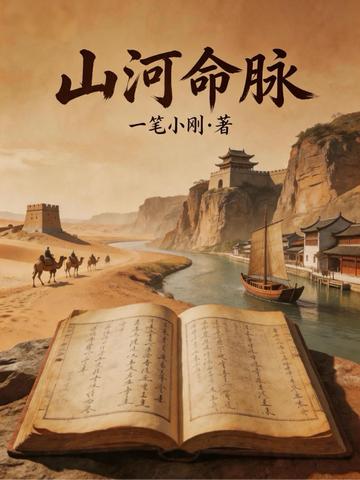
A Silk Road that runs from east to west, a Jianmen Pass that stands on the Shu Road, and a Beijing-Hangzhou Grand Canal that has flowed for thousands of years—these three geographical coordinates are like three lifebloods, connecting the majestic mountains and rivers of China and the depth of history.
In contemporary times, Lin Yuanzhou, a professor of historical geography, was appointed to preside over a national key ancient book compilation project. Faced with the vast number of single fragments in the library, he convened a special team, including Su Tang, an expert in ancient book restoration. Su Tang's great-grandfather Su Jingzhai was actually the last generation of "book travelers" walking on the Silk Road in the late Qing Dynasty - a mysterious figure who secretly escorted ancient books back east in the name of selling books.
As the research deepened, Lin Yuanzhou and Su Tang discovered that what they faced was not only yellowed pages, but also the memory of their home and country that countless people had guarded with their lives for thousands of years. From the family letters engraved on the beacons by the Western Han Dynasty soldiers, to the quatrains inscribed by the Tang Dynasty poets at Yangguan; from the last words of the Southern Song generals who died in battle at Jianmen Pass, to the canal boat songs transcribed by the Ming Dynasty merchants; to the tragic past of a group of literati who spent their lives escorting 30,000 ancient books through the natural dangers of Jianmen during the Anti-Japanese War... Behind every page of ancient books, there is a story of mountains, rivers and people.