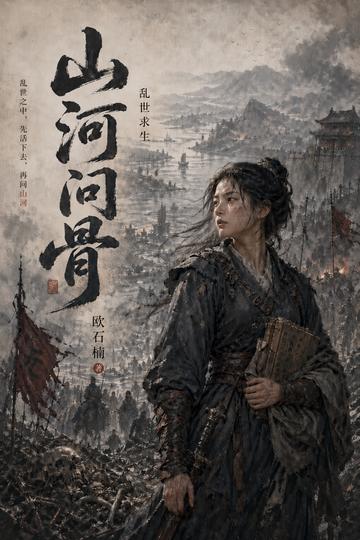
At the end of the Yuan Dynasty, war broke out, and Gu Xingzhou, the daughter of a military household, was separated from her family. She picked up food from the dead, escaped from the refugee camp, and climbed step by step from a handyman in the supply camp to the position of a Chinese military clerk, just to find out the cause of her father's death.
She checked it out—only to discover that her father's death was just the tip of the iceberg. Some people took advantage of the troubled times to change their military status, acquire land, emigrate people, and wash away their achievements. This black line ran from local powerful people to the mansions of founding heroes, and even extended to the foundation of the new dynasty.
When the dust of the Poyang Lake War settled and a new dynasty was about to be established, she could have accepted the gold seal, homestead and fame, but chose to refuse. She turned to erecting monuments, building memorials, setting up schools, and compiling name books for the unnamed dead.
She won some, but also lost more.
This novel describes how a small person in troubled times is pushed forward by fate, and how he chooses not to be included in the face of the truth. There is no cheap reunion, no simple revenge, only the heaviness and stubbornness of people spending their whole lives asking for bones, leaving names, and spreading fire when mountains and rivers are silent.
Mountains and rivers are silent, but people have to speak.