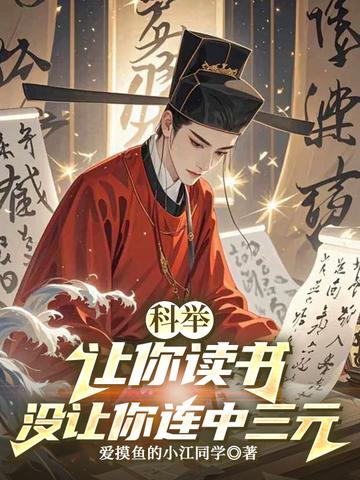
Zhang Hou transmigrates.
A graduate student in history from Peking University, yet at six years old he's sent off to work in the fields?
He immediately makes a scene: no matter what, he's going to study!
His mean-spirited aunt uses filial piety to force him to accept his lot?
Then it's magic against magic: the Analects versus filial piety!
The teacher's pampered kid thinks he can bully people at school?
He teaches him reason with his left fist and virtue with his right, and the teacher even praises his backbone, saying it befits the teachings of Confucius and Mencius!
What? You say he's all talk and doesn't stand a chance at the imperial exams?
The forgetting curve, sleep-based memorization, the learning pyramid...
He masters the basics in half a month and memorizes the Analects in ten days. That's the overwhelming advantage of a modern graduate-school candidate!
Someone else asks what an exam candidate knows about poetry, essays, and policy arguments.
Zhang Hou smiles. “I'm a history student. Is it really so strange that I know a little about politics, culture, economics, military affairs, and people's livelihoods?”
Many years later, the Zhang clan of Quanzhou rises to prominence in Fujian, with Zhang Hou's name proudly inscribed at the top of its family genealogy!
Top scorer in all three imperial examinations, leader of the New Party, foremost expert on river management, the Xi Xia people's eternal stern father, and the Khitan people's living god...
A folk song in Fuzhou goes: “Where the Nantai River meets, a prime minister will rise!”
(A true study fanatic, a real scholar. No System, no photographic memory, and no forced technological development. A satisfying farming-family rise-to-success story. The author dares to write the gritty details.)
 I Asked You to Kill Wei Wei, Why Did You Eat All Wei Wei?
 The City Was Locked in a Strange Start, and I Rushed Out of the Restricted Area.
 Thriller Game: I Have a Thousand Faces
 Naruto: Naruto’s Over the Moon When I Charge His Friends a Fee from the Start
 Naruto: With Maxed-Out Affection, I’m Invincible in the Shinobi World
No nonsense, the characters are more realistic.