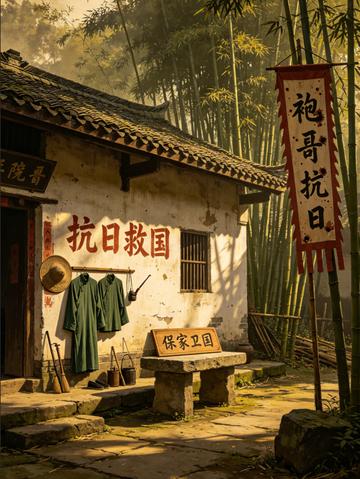
A child of Pao Ge's family in eastern Sichuan, he practiced martial arts since childhood and had leadership skills. After the outbreak of the Anti-Japanese War, he organized the Pao Ge Anti-Japanese Volunteer Team and went out to Sichuan to fight the war. In August 1937, Liu Xiang, as the young leader of Pao Ge's "Yi Zi Tang", heard the news of the Japanese army's attack on Shanghai in a teahouse in the town. He had a dispute with local conservative forces. He showed his patriotic passion and force, conquered a group of brothers, and determined to leave Sichuan.
Reader comments
The Sichuan Army's war of resistance against the Ming Dynasty remains in the history of the Qing Dynasty. The Sichuan Army's patriotism is a model for the Chinese people. Pay tribute to the Sichuan Army! This book is well written, but the story is a bit short. The description of the hardships of the Sichuan Army in the War of Resistance, lack of food, lack of warmth, lack of guns, lack of ammunition, and the shame of the motley army is a bit over-the-top and a bit simplistic. Salute to the Sichuan Army for their firm determination to protect the country! ! !
The Sichuan Army's war of resistance against the Ming Dynasty remains in the history of the Qing Dynasty. The Sichuan Army's patriotism is a model for the Chinese people. Pay tribute to the Sichuan Army! This book is well written, but the story is a bit short. The description of the hardships of the Sichuan Army in the War of Resistance, lack of food, lack of warmth, lack of guns, lack of ammunition, and the shame of the motley army is a bit over-the-top and a bit simplistic. Salute to the Sichuan Army for their firm determination to protect the country! ! !