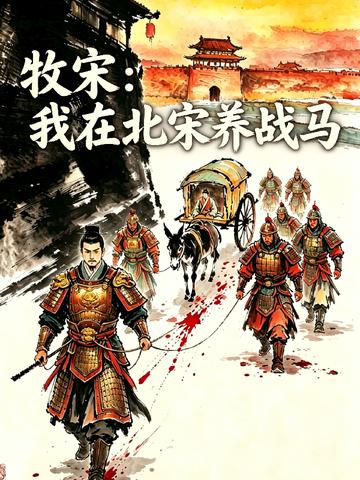
At twenty-eight, Lin Xuan, a doctor of equine science, opened his eyes to find himself a sixteen-year-old junior officer in the Palace Guard. By the banks of the Gaoliang River, the Song army was in full rout, and Liao cavalry surged like a tide. He crawled out from a heap of corpses and began a long journey, not to win a noble title or become a high minister, but to help horses run farther and build institutions that would outlive the people who created them.
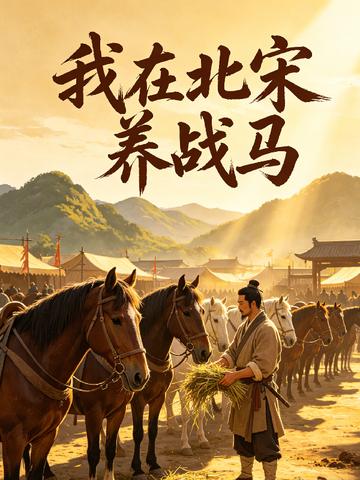
This is not a story about using modern knowledge to crush the past. Lin Mu applied equine science to establish a system of pedigree registration, feed comparisons, and castration records. He also learned from the wisdom of the past: scouts who read hoofprints, veterinarians with proven remedies for horses, and veteran generals who knew how to command troops. Knowledge flowed both ways between two eras. From the Horse-Breeding Directorate to the Draft Animals Bureau, from the Academy of Natural Studies to the Institute of Strategic Mapping, four institutions rose from nothing. They transformed horse breeding from a craft based on experience into a verifiable science, and turned a loose band of spies into an intelligence network where the overt and covert worked hand in hand.
What truly gave these institutions a firm foundation were the people whose names they remembered. The price of building them was remembered too: “Let those who come after see this and know that every institution is built at a cost.”
From the donkey carts at Gaoliang River to the whinnying horses at Chanyuan, from the disastrous northern campaign of Yongxi to the windswept heights of Hengshan, forty-eight years passed. One man spent a lifetime proving a single truth: institutions do not need heroes to keep running. Decades later, an old veterinarian at the Horse-Breeding Directorate opened the pedigree register for a newborn foal and entered “Ninety-Three.” Nearly a hundred generations of horses had been recorded on the same forms. A new student at the Academy of Natural Studies walked into the depths of the archives, where his teacher pointed to an old bridle on a shelf and told the story of the first mare. Outside the window, a jujube tree was putting out fresh shoots.
Donkeys carried feelings; horses carried institutions. The tree they planted is still growing.