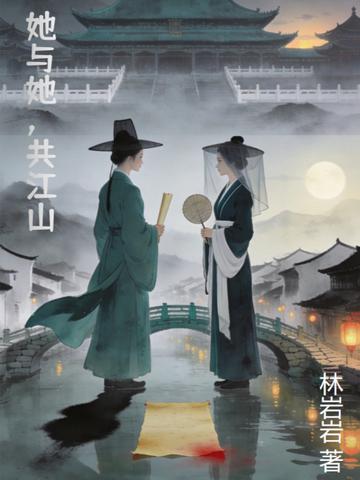
For eighteen years, her mother made Ji Zhiyi live as a secret. When the youngest son of the Liu family died in infancy, the Ji clan claimed the baby had survived to keep the family’s branch from being stripped of its farmland by their relatives. From then on, Ji raised her daughter as a son. She taught her to read and write, shielded her from any situation that might expose her sex, and, when they were alone, called her by her childhood name. “Zhiyi, remember: you aren’t deceiving anyone. You’re just living.”
Ji Zhiyi grew up carrying that heavy legacy. She passed the prefectural examinations and became a renowned young scholar across the surrounding villages. But her mother did not live to see her go any further. After her mother’s death, Ji bore the secret alone, until the eldest daughter of the Shen family came to call.
Shen Qingci was the only daughter of an imperial merchant family, wealthy beyond compare and skilled at scheming, yet determined not to marry. Her relatives coveted the family fortune, so she needed an obedient husband to silence the gossip. The people she sent to investigate Ji Zhiyi returned with one intriguing detail: the village doctor had once said the Liu family’s baby might have been a twin.
“Does Young Master Liu have any secrets you need to tell me before we marry?” Shen Qingci asked.
After a long silence, Ji Zhiyi replied, “There is one. I’d only dare tell you if you were willing to stake your life on it.”
One did not want to take a wife; the other did not want to marry. A written agreement bound two women who had no say in their own fates.
Years later, when someone asked how the youngest chief minister in Great Yan had come to follow this path, she thought for a moment and said, “It began when two people refused to accept their fate.”