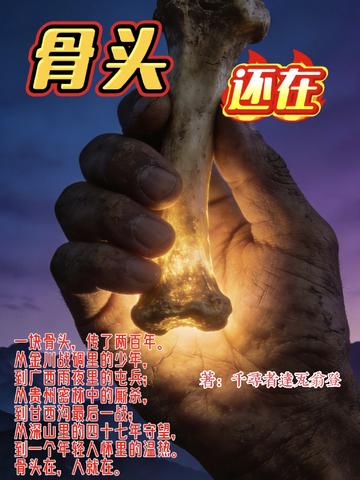
Where the bones are, the people are there.
During the Qianlong period of the Qing Dynasty, after the Battle of Jinchuan and Jinchuan, the Qing government established five villages in western Sichuan and organized the Jiarong Tibetans into "Tuen soldiers". They climb mountains as if they were walking on flat ground, and fight without fear of death. They are the sharpest mountain blades in the hands of the imperial court.
Muzu Solang was born in Xiamengtun. He was selected by a mysterious lama since he was a child and passed on to him a bone that has been passed down for hundreds of years. He fought in Guangxi and Guizhou successively and survived among the dead, but found that he and his "additional troops" were always inferior to others.
He donated money to supervise students, changed names, and advocated the abolition of hereditary inheritance. He tried every means to let the court know: We are human beings too.
But there are some rules, if you violate them, you will die.
In March of the fourth year of Tongzhi, Ganxigou. Six hundred additional garrison troops faced the two thousand imperial army. Muzu Solang took one last look at the knife in his hand and remembered the lama's words:
"As long as the knife is still in your hand and your heart is still in your heart, you haven't lost yet."
He lost this battle.
But the bones are still there.
His daughter Aniu carried her father's head on her back and retreated into the mountains, becoming the legendary "mandrill". She stayed in the cave for forty-seven years, guarding her father's grave and the bone, waiting for someone to come and get it.
More than a hundred years later, that bone is still in someone's arms, as warm as ever.
This is a story about rules and resistance, memory and forgetting, bones and soul. It takes place in a real historical setting, but a story is a story - all characters are fictional and any coincidences are purely accidental.