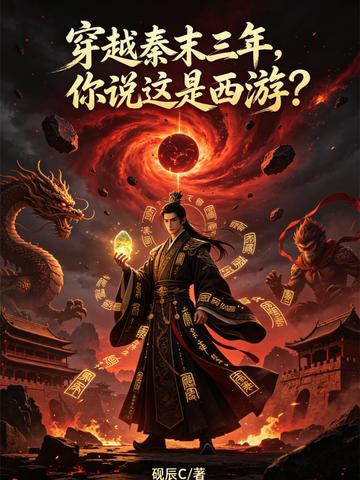
By his third year in the late Qin, Chen Yuan had finally accepted his lot.
Saving the Great Qin, rewriting history: it was all nonsense. In this world, a person was worth less than grass.
All he wanted was to survive until the Han dynasty and use the knowledge in his head to earn a peaceful life in his old age.
Then a meteor fell from the sky, and Mars stood guard over the Heart constellation.
The fragment of ancestral jade in his arms suddenly grew hot, and a cold voice rang through his mind:
[Warning: This is not history. It is a distorted projection of the dark mythology of Journey to the West.]
[The Heavenly Dao has its own agenda and is devouring humanity’s fortune.]
[You are the only “variable,” and the prey it must eliminate.]
Only then did Chen Yuan understand.
On the banks of the Wu River, the bloodlust of Xiang Yu’s suicide became a tiger demon, drawn in by the Buddha’s light from the West.
Beneath the ruins of Epang Palace, the anguished cries of the dragon clan, personally suppressed by the First Emperor, rang out.
And beneath Five-finger Mountain, a certain monkey sneered: “Hey, you’ve got the smell I hate most on you... and the kind of temperament I like best.”
So the Chu-Han Contention was a game played by immortals and Buddhas, and the Mandate of Heaven was a trick to harvest the world’s fortune.
And he, a transmigrator who had nearly been worn down by the chaos of war, held the “Wenmai” and “Sign-in” Systems, making him the only one able to write on the hidden side of history.
From the Qin and Han to the height of the Tang, he traveled through years that had been rewritten:
He signed in amid the ashes of the book-burning and unearthed ancient truths the Heavenly Dao had failed to erase.
He carved words into the east wind at Red Cliffs, leaving humanity a spark that would never die.
When he reached the foot of Spirit Mountain, the four awakened master and disciples stood behind him, along with countless figures rising from the dust of history.
Chen Yuan looked up and calmly addressed the “Heaven” devouring all living things:
“You’ve enjoyed three thousand years of offerings. Time to give them back.”
Core appeal: historical revelations, mythological reinvention, and battles of culture, using knowledge to fight the gods.