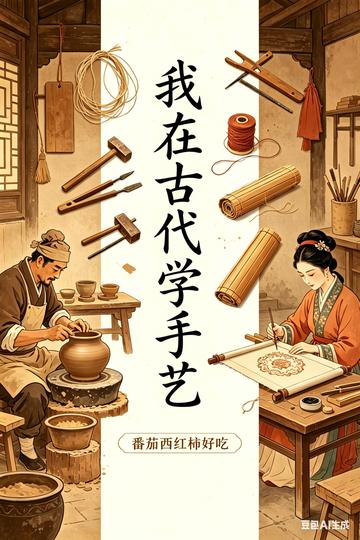
When Fang Yan was 28 years old, he was laid off from the company. On the same day, the landlord pressed for rent, and my girlfriend deleted her as a friend, leaving her account with a balance of 2,136 yuan. When he was desperate, he opened the sandalwood box left by his grandfather. Inside there was only a bronze talisman, a whetstone, and a piece of paper. The note read: Hold it tightly and go to whichever dynasty you want to go. He tightened his grip. What I was thinking was: Things from the Qin Dynasty are valuable.
From the injured barracks at the end of the Qin Dynasty to the library of the Three Kingdoms, from Caishiji in the Tang Dynasty to the construction site of Yancheng in the Southern Song Dynasty, Dialect traveled through two thousand years and met a group of people whose names are not recorded in the history books - the old scouts who risked their lives to explore the corridor, Chen Ping, the scribe who was burned to death in a grain truck, Zhao Desheng, who had been grinding ink for Li Bai for ten years, Chen Da, who used a crooked ruler to measure trenches all his life, and Lao Yu, who had been mending books in Liulichang for forty-one years. They put whetstones, bamboo slips, rulers, and tape into Fan Yan's hands and said, "Where the stones are, there are people."
Bring the dialects back one by one and record them one by one. From the "Museum of the Unknown" to the "Technique Training Center", from being forced into a corner by life to bearing the weight of two thousand years - he found the place where he should go seriously.
It's not a time-travel novel, it's a story about a person's hand touching another hand two thousand years ago. From root to tip, no process is skipped.