Tang San was buried, and Jin Chanzi was reincarnated in the tenth life. He did not recite Buddhist scriptures or practice compassion. One thought is compassion, the other thought is killing.
He believes that the big fist is the last word.
All heavenly rules and Buddhist precepts are all bullshit in his eyes.
On the way west, are monsters blocking the road and eating people? Kill.
Does the Bodhisattva mount do many evil things? Kill.
Descendants of gods harming the common people? Kill as you please.
The journey to the west is not about learning, but about reckoning.
Tang Sanbian doesn't know the plot of the original work and doesn't care.
He only knows: Monsters that eat people deserve to die, and so do gods who fool the people.
The three burials are not the three Tibetans. They do not save the world, but only bury the evil ones.
"Bury evil thoughts, cut off vain thoughts, and cut off the source of inner demons."
"Secondly, bury delusional desires, eliminate the interference of greed and anger, and destroy the roots of troubles."
"Three burials of dusty attachments, away from the confusion of the world, and breaking the barriers of ignorance."
Learning from the scriptures is false, but killing is true.
Along the way, gods will kill gods if they stand in their way, and Buddhas will kill if they stand in the way of Buddha. Through the journey of three burials, I can prove the teachings of Tripitaka.
Reader comments
Three burials and four apprentices:
The eldest disciple is Wukong. Wukong observes the world: he sees through the vanity and vanity, and subdues his anger.
The second disciple, Xiong Er, realized that he could restrain his greed: restrain his greed and uphold the precepts.
The third disciple, White Snake, learned how to be brave and defeat cowardice: stand up fearlessly, cut off cowardice, and dare to face difficulties.
The fourth disciple and the six ears understood the thought of purifying dust: wash away karma and distracting thoughts, and the original mind will be pure.
PS: The foundation of cultivation in the original work of "Journey to the West" is the five major systems of heavenly immortals, earthly immortals, gods, human immortals, and ghost immortals. These are the five independent tracks of Daoguo, not the mandatory upgrade chain of "Ghost Immortal→Human Immortal→Earth Immortal→Heaven Immortal" in the online article.
The system of the five tracks is complex. In order to facilitate everyone's reading, the cultivation levels of the five tracks are unified.
Mortal Realm—Sanxian (Earth Immortal)—Celestial Immortal—Golden Immortal—Taiyi Golden Immortal—Daluo Golden Immortal—Quasi Saint—Sage
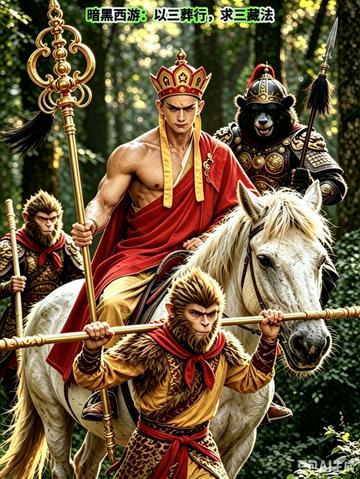
Three burials and four apprentices: The eldest disciple is Wukong. Wukong observes the world: he sees through the vanity and vanity, and subdues his anger. The second disciple, Xiong Er, realized that he could restrain his greed: restrain his greed and uphold the precepts. The third disciple, White Snake, learned how to be brave and defeat cowardice: stand up fearlessly, cut off cowardice, and dare to face difficulties. The fourth disciple and the six ears understood the thought of purifying dust: wash away karma and distracting thoughts, and the original mind will be pure. PS: The foundation of cultivation in the original work of "Journey to the West" is the five major systems of heavenly immortals, earthly immortals, gods, human immortals, and ghost immortals. These are the five independent tracks of Daoguo, not the mandatory upgrade chain of "Ghost Immortal→Human Immortal→Earth Immortal→Heaven Immortal" in the online article. The system of the five tracks is complex. In order to facilitate everyone's reading, the cultivation levels of the five tracks are unified. Mortal Realm—Sanxian (Earth Immortal)—Celestial Immortal—Golden Immortal—Taiyi Golden Immortal—Daluo Golden Immortal—Quasi Saint—Sage