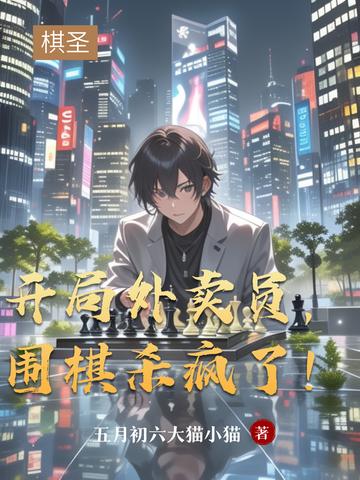
Lu Chen, a deliveryman, never says a word. He only plays chess. In a battle at South China Street Park, he forced a famous online chess player with a 99.9% AI win rate to resign in just 37 moves. A white stone fell like a slap, jolting an age of vanity awake.
From then on, the “Delivery Chess Demon” swept through street-side chess arenas, only to be blacklisted by the Chess God Group and smeared by the Star Chess Alliance. Only Lin Yan, an archivist at the classics library, recognized the long-lost “Three-Link Boot-Reversal” in his hands, the final masterpiece of a Southern Song chess sage.
When the capitalists set up a million-dollar betting match, he broke their killing formation with the “Thirteen Ghost Gate Moves.” When an AI cluster hunted him with astronomical computing power, he played a useless point with a 0.001% chance of winning and brought the system crashing down.
But the real ko fight was not on the board. It was in people’s hearts: Can data define the Way of Chess? Can algorithms measure the soul?
At his lowest point, he coughed up blood on Mount Qingfeng and grasped the Way: “Chess isn’t about winning. It’s about seeing clearly within.”
At the final game, he turned his delivery box upside down to serve as a board in the street park and declared to the whole city: “You believe in win rates. I believe in the sound of a stone being played.”
This is no face-slapping wish-fulfillment story. It is the awakening journey of a silent guardian of the Way, who takes the fight to the world and breaks through its deadlock.
A chess piece falls, and the chimes ring out in the distance. The Way of Chess endures, for a true dragon has arrived.