Chang’an has fallen, the Tang court has fled west, Fengxiang is running out of food, and the army is on the verge of mutiny.
The moment Zhu Bingyu opens his eyes, he is kneeling at an execution ground, a condemned man about to be sacrificed in a flag-raising ritual.
For others, transmigrating means changing their fate. For him, it means staying alive first.
With one sentence, “The grain hasn’t been lost. It’s still in the city,” he snatches a breath of life from beneath the executioner’s blade and steps straight into the dirtiest, most dangerous mess in Fengxiang.
The problem looks like a food shortage, but in truth, the military governor’s staff, the barracks, the trade routes, and the rebel army’s secret agents are all tangled together, slowly bleeding this key city of Guanzhong dry.
The grain records are fake, the troop numbers are a sham, the gates are vulnerable, the guard rotations are in chaos, and dirty dealings are hidden everywhere, from the grain road south of the city to the storehouse behind a post inn.
Zhu Bingyu has no powerful family to rely on and no troops who will answer his call. All he has is a ledger, a brush, and a mind clearer than anyone else’s.
He must establish himself among starving soldiers, brutal generals, corrupt officials, and local strongmen. Then, following one old receipt after another and one roster of phantom names after another, he will dig out the hidden hands behind the military governor’s residence, the army granaries, the prefectural prison, and the city gates.
This is the story of a condemned man climbing his way to the table in the dying Tang dynasty’s Fengxiang.
It is also the story of a humble magistrate who wields paper and brush like a blade, fighting for his life amid chaos, for Fengxiang’s chance to survive, and for one more breath for the Tang dynasty
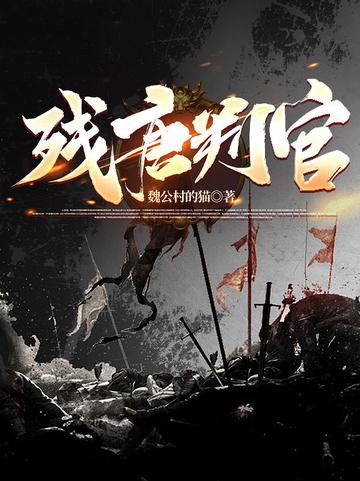

"Judge of the Lost Tang Dynasty" really found a treasure! In a market crowded with Chuan Shuang articles, it has taken a completely different path. The protagonist starts as a death row prisoner in the execution ground. There is no golden finger buff or big boss to protect him. He only has a pen and an account book in his hand. He relies on his clear mind and ruthlessness to survive in troubled times. The author's depiction of the background of the remnant Tang Dynasty is so immersive. The struggle for power and the chaos of food shortage in Fengxiang City are described with great depth. The hidden intrigues between the shogunate, the military camp, and the corrupt officials are so vivid that it makes one's scalp numb. The plot is high-energy throughout. The protagonist fights for his life from the guillotine, and then follows the old bills and empty name books to find out the mastermind step by step. The rhythm is tight and brain-burning. There is no intelligence operation, and the whole game is solved by logic and details. This setting of using pen and paper as a knife, fighting for a way out for yourself and the people as a judge in troubled times, is both irritating and poignant. Every chapter makes you want to read it, and it is a book with great potential that deserves its title!