His name is Liu Yu, and his nickname is Jinu.
His mother died on the day he was born, and his father threw him into a mass grave, saying that he was the son of his mother. He was picked up by the widow's aunt and lived by selling straw sandals. He squatted in the market and was called a pauper. He went to a gambling house and ran into debt and was tied to a horse stake and whipped to pieces. Everyone felt that this kid was finished in his life.
But they didn't know that this poor boy had a birthmark of a Pelican dragon on his back.
A dragon medal appears in Zhulin Temple, a magic medicine is obtained by shooting a snake in Xinzhou, and the king's land is cut off from the tomb of Hou Shanxiang - destiny requires him to fight his way out from the bottom. He surrendered to Beifu and defeated ten thousand enemies with a hundred men; he raised troops at Jingkou and killed Huanxuan and supported the Jin Dynasty; he attacked Southern Yan in the north and captured Murong Chao alive; he conquered Qiao Zong in the west and flattened Shu; he marched to Chang'an and regained his old capital. They stepped on countless corpses and beat them all the way from the straw shoe stall to the dragon chair.
Even a poor family can turn the world upside down. This is how to set an example for the poor people in the world!
(Disclaimer: This article is a historical novel based on official historical records such as "Song Book" and "Zi Zhi Tong Jian", and with reference to Mr. Cai Dongfan's "Popular Romance of Chinese Dynasties" and other classical romance materials, and is artistically processed and created. The book describes the legendary life of Emperor Wu of the Southern Dynasty Song Dynasty Liu Yu from a humble outcast to the founding emperor, covering his rise in the army at Jingkou, the pacification of Sun En, the destruction of Huan Xuan, the Northern Expedition to Southern Yan, the pacification of Lu Xun, and the Western Expedition of Qiao Zong , the Northern Expedition after the Qin Dynasty, the Jin Dynasty and the Song Dynasty, and other major historical events. Since the work is based on real history, the characters, events, and plot frames in the book are all derived from public historical materials, so there may be some similarities with other publicly released historical-themed literary works, film and television works, and audio works, which are normal phenomena in historical creation and are by no means plagiarized.)
Reader comments
"A poor family can turn the world upside down", this slogan is exciting. But the most cruel thing about this work is that it makes no secret of the "sky-breaking" cost.
From the straw sandal stall to the dragon chair, Liu Yu stepped on not auspicious clouds, but "countless corpses" - those of his enemies, his colleagues, and even innocent people. The work does not avoid the bloody cost behind success: every victory (a hundred men defeat ten thousand enemies, capture Murong Chao alive, recapture Chang'an) is accompanied by multiple deaths. The so-called "setting an example for the poor people in the world" is not to set an inspirational example, but to tell you: the road to counterattack at the bottom is paved with life.
The author uses Liu Yu's life to answer a cruel question: How many people must be killed and how many cities must be leveled by an abandoned child who was thrown into a mass grave by his father before the world can change their name to "Your Majesty"? The answer lies in these hundreds of thousands of words of swords and swords.
This novel is based on official historical records, adding artistic techniques to depict the inner world of historical figures. It is a secondary creation on the basis of respecting history without being similar to other public second works, allowing readers to deepen their understanding of this period of history while reading the novel.
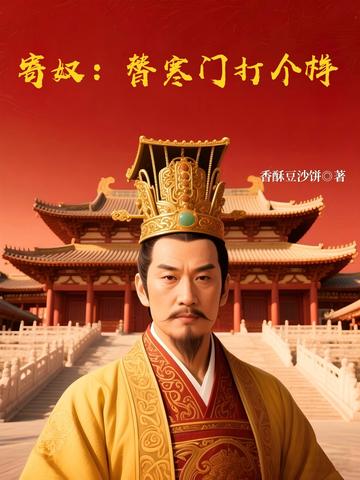
"A poor family can turn the world upside down", this slogan is exciting. But the most cruel thing about this work is that it makes no secret of the "sky-breaking" cost. From the straw sandal stall to the dragon chair, Liu Yu stepped on not auspicious clouds, but "countless corpses" - those of his enemies, his colleagues, and even innocent people. The work does not avoid the bloody cost behind success: every victory (a hundred men defeat ten thousand enemies, capture Murong Chao alive, recapture Chang'an) is accompanied by multiple deaths. The so-called "setting an example for the poor people in the world" is not to set an inspirational example, but to tell you: the road to counterattack at the bottom is paved with life. The author uses Liu Yu's life to answer a cruel question: How many people must be killed and how many cities must be leveled by an abandoned child who was thrown into a mass grave by his father before the world can change their name to "Your Majesty"? The answer lies in these hundreds of thousands of words of swords and swords.
This novel is based on official historical records, adding artistic techniques to depict the inner world of historical figures. It is a secondary creation on the basis of respecting history without being similar to other public second works, allowing readers to deepen their understanding of this period of history while reading the novel.