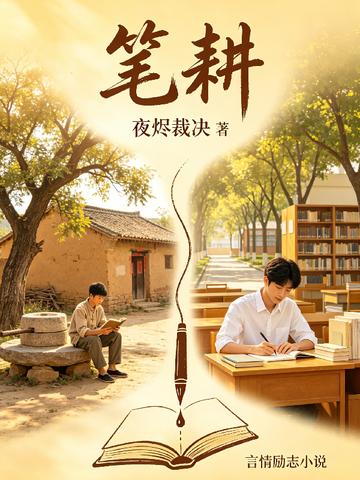
When Zhang Yanyun left Qingshi Hollow, all he owned was an old fountain pen his mother had left him and a saying: “A pen is lighter than a hoe, but it can still grow crops.”
He brought the earthy scent of the countryside with him to the provincial capital’s university and wrote an essay called “Morning on the Field Ridge” in the farthest corner of the cafeteria. When Shen Qingyi, an editor for the campus newspaper, read the line, “The fog will lift, and the sun will come out,” she cried in her office for a long time. His writing began to find an audience, but rejection letters soon covered an entire wall. Hauling sacks of rice at the wholesale market, washing dishes late into the night, and living in a rented room with a leaking roof, he planted himself in the city’s roughest corners, one seedling at a time. And she was the one who noticed the missing button on his cuff.
By the moat, Zhang Yanyun placed the fountain pen in Shen Qingyi’s palm. “My mother said this pen could grow crops. I’ve grown quite a lot. Now I’d like to ask you to help me grow more.” She clasped the pen tightly, rose onto her toes, and gently kissed his forehead.
Other people said his writing was “too rustic.” Shen Qingyi said the best things grew from the soil. But could the crops grown in that soil survive in this city of steel and concrete until harvest time?