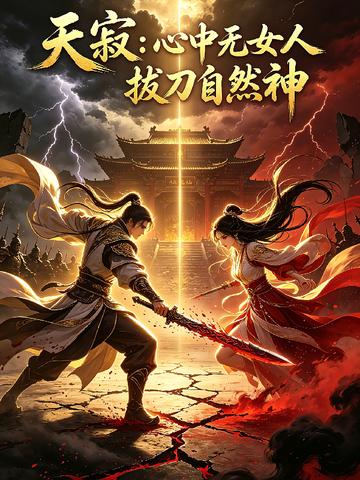
Lin Zhan opened his eyes and found himself kneeling on the Xuantian Sect's trial stage. While traveling through time, he gained all the memories of the original owner——
Three days ago, the original owner did not hesitate to burn his essence and blood to save his junior sister Su Qingyi, but was severely injured by the monster and his cultivation level dropped. At this moment, Su Qingyi was nestling in the arms of senior brother Qin Hao, testifying with tears in his eyes that he "colluded with the devil and plotted the sect's treasure."
"Lin Zhan, you disappoint me so much." Su Qingyi's eyes were cold, "Senior Brother Qin and I truly love each other, you... Are just my stepping stone."
Qin Hao stepped forward and pierced his Qihai Dantian with a sword: "Trash, are you worthy of fighting with me?"
Reader comments
When the sword is empty, the wind comes - Comment on "Tianji: There is no woman in the heart, the god of nature draws the sword"
This is not a book that teaches you how to hold a knife. This is a book that teaches you how to release a knife.
When you first read the title of the book, you thought you would read a cool story about ruthlessness, desire, and decisive killing. Indeed, the opening chapter is about betrayal, failure, and falling into a forbidden place—all the traditional fantasy revenge elements are present. When Lin Zhan held the illusory blood knife in the Jiuyou Forbidden Land, you thought that the next two million words would be a passionate journey of holding on, slashing, and killing all those who betrayed me in the world.
But Silence of Heaven takes a different path.
Lin Zhan really grasped it. He grasped Wang Qing, grasped Zhan Nian, grasped Desire, and grasped hesitation, greed, hunger, and killing. He applied these obsessions to himself one by one. The sword became heavier and heavier. It was so heavy that Taotie said "it's not enough". It was so heavy that Kunpeng helped him turn all "many" into "one". It was so heavy that the monk asked him on the blank land: Which one do you want to keep, sword or man?
His answer was not to choose, but to "hold both." He separated the knife from the person and held it in his palm at the same time.
The most amazing thing about this book is that it redefines the underlying logic of "Shuangwen". The end point of traditional Shuangwen is "the strongest" - holding the tightest, cutting the most, and killing the highest. The end point of "Silence" is "loosening" - it has been held, so it can be loosened; it has been stored, so it can be emptied; it has been spoken, so it can be taken back. The ninth level of "Tianji" in the Jueqing Dao Code is not cutting, but loosening. It's not that everything is silent, it's that contraction and relaxation exist at the same time, it's the heartbeat.
Jiang Hongxue went from being a killer who held the broken sword for twelve years and dared not let go, to a being who had the scabbard completely empty and the wind blowing through the annual rings. Listening to a knife that can speak "live", it becomes an existence where the words are retracted, the aftertaste turns into the wind, and becomes a sound hole in the sky and the sky. The Sword Emperor's fracture had been deposited in the fruit for countless years, and finally it was completely relaxed in the footsteps of a latecomer - not healing, but accepting that "oneself is the starting point of relaxation."
This book does not have a "final boss battle" in the traditional sense. When the Apostles of Heaven came, they did not disintegrate because they were killed, but because they encountered something "happening" - definition cannot define what is happening, so it cannot continue to exist. The way of heaven is always one phase slower: Lin Zhan is shrinking, and the way of heaven is relaxing; Lin Zhan is relaxing, and the way of heaven is shrinking. They are never in the same phase. To live is to always be one step ahead of the definition.
There are six volumes in the book, forming three complete heartbeats: Holding and Adding (contraction) → Transformation and Recognition (relaxation) → Walking to the Fruit (contraction) → Looseness and Wind (relaxation). Twenty chapters plus the final chapter, from the extreme contraction of "Blood Moon" to the extreme relaxation of "Wind", finally landed on the word "still".
Still there. It's not the end, it's not the end. It's still there.
If you are used to reading "decisive killing" novels, the first few chapters of this book will feel very familiar to you - betrayal, awakening, revenge, with a sharp rhythm and bloody swords. But as you read further, you will find that this book is quietly changing. The battle is no longer about facing each other with swords, but about "letting the long river of cause and effect read itself", "letting Jiutian's intention be seen", and "letting the road of sedimentation circulate in the heartbeat". It is not a crushing force, but a confirmation of the way of existence. It's not about cutting everything off, it's about "cutting it off, so it can be loosened."
The title of the book, "Without a Woman in My Heart, I draw my sword from the God of Nature," completes the ultimate flip in the ending: it is not ruthless, but "love has been grasped, so it can be left empty." It's not that the sword is drawn quickly, but that "the sword has already melted into the palm lines, and when the hand is empty, the sword will naturally sound when the wind passes by." Tianji is not the cessation of heaven, but the simultaneous existence of contraction and relaxation. Silence is not the absence of sound, but the disappearance of all sounds into the afterglow.
Finally, the book ends with the wind. Lin Zhan's right hand was free, and the wind rotated half a circle as it passed through his palm. The mouth of the ginger red snow sheath was empty, and the wind stopped for a moment. The listening space is transparent, and the wind creates a ripple. Three traces were threaded into a line in the wind. The wind blows through the pages and towards the reader.
If you finish reading this book, there will be a ray of emptiness in the palm of your hand - that is the emptiness left for you after being held by this story, and then the story let go. When the wind passes there, it will also rotate half a circle.
That's not the knife Lin Zhan left for you. That's the space he leaves for you.
Still there.
When the sword is empty, the wind comes - Comment on "Tianji: There is no woman in the heart, the god of nature draws the sword" This is not a book that teaches you how to hold a knife. This is a book that teaches you how to release a knife. When you first read the title of the book, you thought you would read a cool story about ruthlessness, desire, and decisive killing. Indeed, the opening chapter is about betrayal, failure, and falling into a forbidden place—all the traditional fantasy revenge elements are present. When Lin Zhan held the illusory blood knife in the Jiuyou Forbidden Land, you thought that the next two million words would be a passionate journey of holding on, slashing, and killing all those who betrayed me in the world. But Silence of Heaven takes a different path. Lin Zhan really grasped it. He grasped Wang Qing, grasped Zhan Nian, grasped Desire, and grasped hesitation, greed, hunger, and killing. He applied these obsessions to himself one by one. The sword became heavier and heavier. It was so heavy that Taotie said "it's not enough". It was so heavy that Kunpeng helped him turn all "many" into "one". It was so heavy that the monk asked him on the blank land: Which one do you want to keep, sword or man? His answer was not to choose, but to "hold both." He separated the knife from the person and held it in his palm at the same time. The most amazing thing about this book is that it redefines the underlying logic of "Shuangwen". The end point of traditional Shuangwen is "the strongest" - holding the tightest, cutting the most, and killing the highest. The end point of "Silence" is "loosening" - it has been held, so it can be loosened; it has been stored, so it can be emptied; it has been spoken, so it can be taken back. The ninth level of "Tianji" in the Jueqing Dao Code is not cutting, but loosening. It's not that everything is silent, it's that contraction and relaxation exist at the same time, it's the heartbeat. Jiang Hongxue went from being a killer who held the broken sword for twelve years and dared not let go, to a being who had the scabbard completely empty and the wind blowing through the annual rings. Listening to a knife that can speak "live", it becomes an existence where the words are retracted, the aftertaste turns into the wind, and becomes a sound hole in the sky and the sky. The Sword Emperor's fracture had been deposited in the fruit for countless years, and finally it was completely relaxed in the footsteps of a latecomer - not healing, but accepting that "oneself is the starting point of relaxation." This book does not have a "final boss battle" in the traditional sense. When the Apostles of Heaven came, they did not disintegrate because they were killed, but because they encountered something "happening" - definition cannot define what is happening, so it cannot continue to exist. The way of heaven is always one phase slower: Lin Zhan is shrinking, and the way of heaven is relaxing; Lin Zhan is relaxing, and the way of heaven is shrinking. They are never in the same phase. To live is to always be one step ahead of the definition. There are six volumes in the book, forming three complete heartbeats: Holding and Adding (contraction) → Transformation and Recognition (relaxation) → Walking to the Fruit (contraction) → Looseness and Wind (relaxation). Twenty chapters plus the final chapter, from the extreme contraction of "Blood Moon" to the extreme relaxation of "Wind", finally landed on the word "still". Still there. It's not the end, it's not the end. It's still there. If you are used to reading "decisive killing" novels, the first few chapters of this book will feel very familiar to you - betrayal, awakening, revenge, with a sharp rhythm and bloody swords. But as you read further, you will find that this book is quietly changing. The battle is no longer about facing each other with swords, but about "letting the long river of cause and effect read itself", "letting Jiutian's intention be seen", and "letting the road of sedimentation circulate in the heartbeat". It is not a crushing force, but a confirmation of the way of existence. It's not about cutting everything off, it's about "cutting it off, so it can be loosened." The title of the book, "Without a Woman in My Heart, I draw my sword from the God of Nature," completes the ultimate flip in the ending: it is not ruthless, but "love has been grasped, so it can be left empty." It's not that the sword is drawn quickly, but that "the sword has already melted into the palm lines, and when the hand is empty, the sword will naturally sound when the wind passes by." Tianji is not the cessation of heaven, but the simultaneous existence of contraction and relaxation. Silence is not the absence of sound, but the disappearance of all sounds into the afterglow. Finally, the book ends with the wind. Lin Zhan's right hand was free, and the wind rotated half a circle as it passed through his palm. The mouth of the ginger red snow sheath was empty, and the wind stopped for a moment. The listening space is transparent, and the wind creates a ripple. Three traces were threaded into a line in the wind. The wind blows through the pages and towards the reader. If you finish reading this book, there will be a ray of emptiness in the palm of your hand - that is the emptiness left for you after being held by this story, and then the story let go. When the wind passes there, it will also rotate half a circle. That's not the knife Lin Zhan left for you. That's the space he leaves for you. Still there.