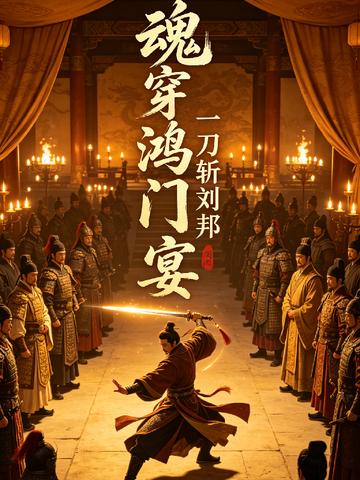
The Soul Passes Through Hongmen Banquet and Kills Liu Bang with One Sword
魂穿鸿门宴一刀斩刘邦
- Status
- Completed
- Length
- 474k Words
- Genre
- Historical
- Subgenre
- Historical & Ancient
- Audience
- Male
- Updated
- 4mo ago
- Source
- Fanqie
Stats
42Reads
60Chapters
7Listens
2.5kReads · all time
If the fighting in ordinary time-travel novels is like "bricks flying with great strength", the action scenes in this book can be called a text version of fencing instruction. The author is obviously well versed in the core tactics of fencing - attack, counterattack, defensive counterattack, sword tip threat and has perfectly transplanted them into cold weapon duels. Xiang Zhuang's blow "aimed at Pei Gong" during his sword dance was reinterpreted as a standard "straight thrust attack": driving with the front foot, extending the arm, and taking the shortest path with the sword tip, as fast as lightning but with clear layers. Every subsequent swing of the sword on the battlefield can see the shadow of modern fencing concepts controlling distance, disrupting rhythm, and luring the enemy deeper. This kind of writing method that injects the technical aesthetics of competitive sports into ancient wars makes every battle full of dismantling wisdom instead of pure bravery.
For every reader who has read "Historical Records" and lamented Xiang Yu's "women's kindness", this book is a hearty emotional massage. In the original work, Fan Zeng's anxiety about "counting the number of kings" at the Hongmen Banquet, Xiang Zhuang's regret that he couldn't dance the sword, and his frustration at the reversal of the situation after Fan Kuai broke in - all disappeared under Xiang Wei's sword. What's even more rare is that the author didn't let the story stay at the level of a "revenge novel". Xiang Wei's hegemony is not Xiang Yu's hegemony: he did not trap and kill soldiers, did not burn down the Qin Palace, but used a modern vision to build a more inclusive and huge empire. What readers see is not only a rewritten history, but also an idealized answer to "if Xiang Yu was not so headstrong". The joy of reversing the case for a hero is intertwined with the imagination of a new civilization. It's hard to get over it after reading it for a long time.
This book does not stop at the cool formula of "kill Liu Bang and change history", but seriously answers the core question: How can a modern athlete dominate the world? Xiang Wei's advantage lies precisely in this - he doesn't understand tactics, so he is not bound by the old rules; he comes from competitive sports, so he is well versed in the logic of the strong who "wins within the rules, and sets the rules above the rules." The novel devotes a lot of space to describing his transformation from "swordsman thinking" to "emperor thinking": how to use the psychological game on the field to control courtiers, and how to sublimate "tactical deception" into "strategic layout." This kind of growth is not forced on us by golden fingers, but is forged step by step in blood and fire. When Xiang Wei's cavalry finally crosses Europe and Asia, readers will truly feel that this empire is worthy of its master.