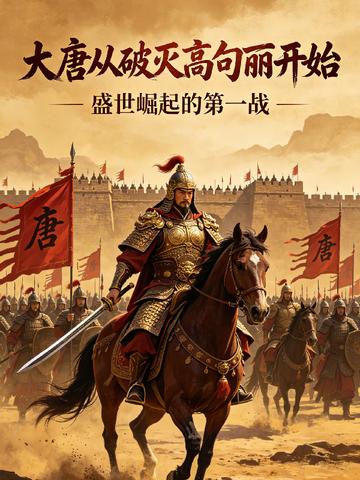
Modern doctor Li Chengfeng accidentally traveled to the 19th year of Zhenguan, which was a critical moment when Emperor Taizong Li Shimin of the Tang Dynasty personally conquered Goguryeo. Relying on his academic accumulation of a thorough understanding of this period of history, he opened the door of the emperor by "observing the sky and offering strange strategies", and then embarked on a journey to reshape the destiny of the Tang Dynasty with the wisdom of future generations for thousands of years.
From Anshi City's poisonous plan to cut off water to the siege of Liaodong City, from cement roads, glass mirrors, hundreds of steel smelting to steam engines, railroad tracks and artillery, Li Chengfeng served as a prisoner with one hand and the science park with the other, burying the seeds of the industrial revolution in the land of China a thousand years in advance. He is famous all over the world for his "talent in creation". He paved the roads of the empire with cement, built unbreakable military formations with steel, and roared the nine states with the power of steam. However, there was an undercurrent in the court, and the Guanlong clan regarded him as a thorn in his side. The struggle between the prince and the king of Wei for the right to inherit the throne drew him into the whirlpool. Even Changsun Wuji, the leader of Lingyan Pavilion's heroes, also fought openly and secretly with him. Facing impeachments, assassinations and technology thefts one after another, Li Chengfeng has always practiced the principle of "not taking sides, only doing things". When the Tibetan army of 300,000 troops pressed into the territory, he laid railroad tracks, cast cannons, and trained new troops. With the power of industrial civilization, he wrote a great victory that changed the laws of war under the city of Lanzhou.
This is a story about the fierce collision between knowledge and power, innovation and conservatism, ideal and reality. Can a thousand-year tragedy be reversed by one person's hands? When the roar of steam engines echoed throughout the Tang Dynasty, the long river of history changed its course.