Lin Ce was woken up by a splash of urine.
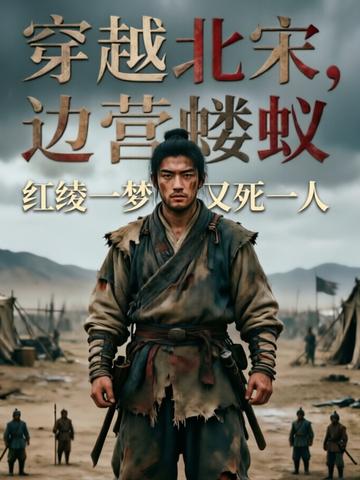
When you wake up, you will be among the dead, three on the left and two on the right. There is a voice in my head, called Doubao, which only reports data but does not judge good or evil - who is friendly, who is hostile, who is afraid, who is calculating. The data is cold and how to use it is his own business. This is the Baigou post camp at the end of the Northern Song Dynasty. He was a soldier at the lowest level, his bowl was cracked, his porridge was mixed with sand, and his camp wall collapsed and no one repaired it. There were a few people around him: Wang Da twisted his clothes, Zhou Cheng covered his feet and stirred the porridge, Li Laowen scraped the ashes of the pot and carved a wooden figure, Ma Bi touched his dagger, and Hou San'er picked up the grass stems and collected the broken bowl. There is no hero, all are ants.
Later, the Liao dog came, and so did the golden dog. The city was destroyed, people died, and the living fled south. From Baigouyi to Xiongzhou to Taiyuan to Lin'an, from the ant in the border camp to the chief clerk of the grain farm, Lin Ce watched, endured, and lived all the way. Hou San'er opened a shop called "Hou Ji Dead Bowl", with a name engraved on the bottom of each bowl - dead, living, named, and nameless. By the end of the carving, there were one hundred and seventy-two bowls in the shop.
This book does not write the history of the victors, does not write about black and white right and wrong, and does not make moral judgments. Just write about people - write about them bowing their heads for survival, calculating for interests, trembling with fear, and holding on for dignity. Write about the struggle in cowardice, the compassion in selfishness, and the warmth in despicability. There are no absolutely good people, no inherently bad people, only situations, positions and choices.
The writing style is cold, hard and short. Don't sensationalize, don't preach, don't write emotional words. Just write about actions, objects, sounds, and shadows. The person who wrote that the soles of shoes were worn out still walked, the person who wrote that his knees were stained with dust still squatted, and the person who wrote that the bottom of a bowl was engraved was still walking.