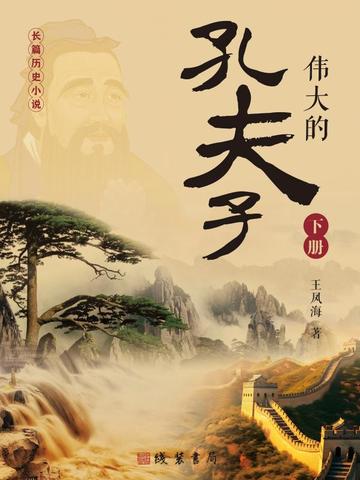
This book focuses on key stages of Confucius's life in his later years, tracing the central ideas of “at sixty, understanding without resistance” and “at seventy, following one's heart's desires without overstepping the bounds.” It recounts his achievements in governing Zhongdu and serving as Grand Minister of Justice, his diplomatic acumen at the Meeting of Jiagu between Qi and Lu, and historical events such as “tearing down the three capitals” and “executing Shaozheng Mao.” It also records the hardships of Confucius's travels among the states after leaving Lu, including the dangers at Kuang and Pu, going without food between Chen and Cai, and his dealings with Nanzi, revealing his steadfast commitment to his ideals. After returning to Lu, Confucius devoted himself to strengthening the state, compiling the “Six Classics,” and teaching his disciples. He put forward important ideas such as “enrich the people, then educate them” and the “Rectification of Names,” holding fast to his belief that “governance means setting things right” even in his later years. Drawing on historical events and the evolution of his thought, the book offers a vivid portrait of Confucius's political ambitions, wisdom, and personal charisma, alongside related accounts such as the birth of the Analects. It combines historical value with intellectual depth.