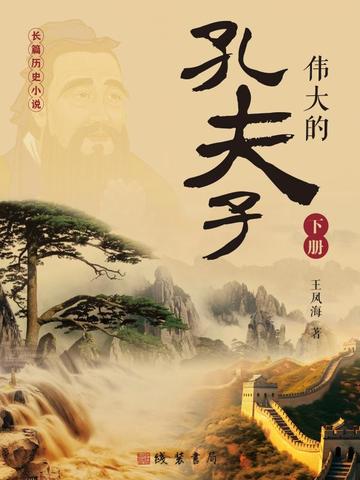
This book focuses on the key life stages of Confucius in his later years, with the core themes of "at sixty, his ears are obedient" and "at seventy, he can follow the heart's desires without exceeding the rules". It details his political achievements of taking over the Central Capital and serving as the chief minister, the diplomatic wisdom of the Qilu Jiagu meeting, and historical events such as "the fall of the three capitals" and the "killing of Shaozhengmao". At the same time, it records the ups and downs of Confucius' journey away from Lu and traveled around the world, including key experiences such as Kuang Pu's death, Chen Cai's loss of food, and interactions with Nan Zi, showing his persistence in adhering to his ideals. After returning to the state of Lu, Confucius devoted himself to revitalizing the state, compiling the "Six Classics", and passing on teachings. He put forward important ideas such as "teaching the rich" and "rectification of names". Until his later years, he still adhered to the belief that "politics must be upright." The book uses specific historical facts and ideological evolution to three-dimensionally restore Confucius' political ambition, ideological wisdom and personality charm. It is supplemented by relevant records such as the birth of "The Analects", which has both historical value and ideological depth.