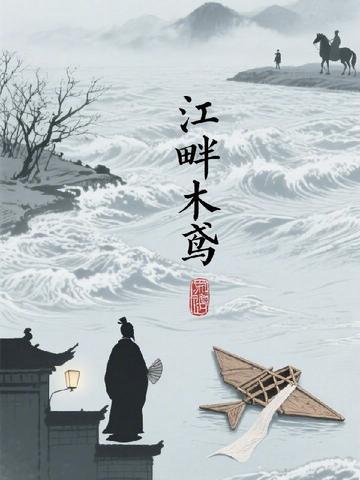
In the autumn of 234 AD, Zhuge Liang died of illness in Wuzhangyuan. When the news reached Jianye, his brother Zhuge Jin burned family letters under the watchful eyes of Sun Quan, and suppressed his grief into a sentence: "Defense in the north of the Yangtze River should be given priority."
In Shu, the younger brother Zhuge Jun, who had been forgotten by history, packed his bags and began a long walk - first to Dingjun Mountain to clear the snow for his second brother; then to the bank of the Yangtze River to find the eldest brother who was so perfect in the court but had already burned himself to death.
This is an epic about "watching". Above the court, the undercurrents of the three generations of emperors and ministers Sun Quan, Zhuge Jin, and Zhuge Ke surged; by the Yangtze River, the thoughts of the three brothers turned into wooden kites, ink marks and wordless family letters, flowing silently under the crushing power and time.
When the death knell of Jianye tolled for Zhuge Jin, when the scepter of Soochow was stained with blood in suspicion, when the beacon smoke of Chengdu swallowed up the last oath of the "son of Marquis Wu", the man who was always walking, witnessing and silent finally hung three wooden kites in his hometown of Nanyang——
One is Longzhong Old Dream, the second is Jianye Hanjiang, and the third is Wuzhang Gulan.
Lands and mountains change owners, and old friends disperse.
Only the water of the Yangtze River passed away, and the wooden kites were still spinning slowly in the wind.