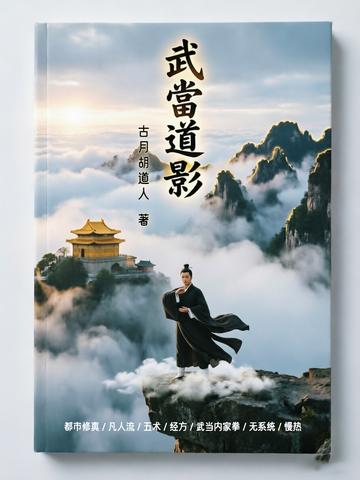
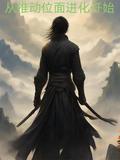
A Wudang Mountain tour guide carves out a path to immortality in the Age of Dharma Decline, using the classical formulas of the Treatise on Cold Damage and Wudang internal martial arts.
Hu Jun, a twenty-six-year-old Wudang Mountain tour guide, has been at it for three years. During peak season, he works himself to the bone leading tours; during the slow season, he lies flat in his rented room.
He thought he knew the mountain only through the tour script he'd memorized a thousand times over.
Then a stone shard he'd picked up began to grow warm.
There was a diagram on it: a crooked map of the body's meridians, like someone's hasty notes. He tried following it, and a warm current rose in his dantian and began moving along those lines on its own.
An old Daoist on the mountain glanced at him and said, “There's something interesting about the way you walk.”
His mother was ill back home, and the cost of her medicine had gone up again. The travel agency had sent word: they were cutting staff for the slow season next month.
Hu Jun had to force a path between reality and cultivation.
He found the principles behind Gui Zhi Tang in the Treatise on Cold Damage and realized that the circulation of qi in classical formulas was the same as the meridian diagram on the shard. The way he'd developed over three years of walking the mountain paths, the old Daoist said, was called Taiji stepping.
Medicine, martial arts, destiny, physiognomy, divination: five paths, all pointing in the same direction.
But in the Age of Dharma Decline, spiritual energy had nearly dried up. The last person to try walking this path was a cultivator at Mount Wudang during the Ming dynasty.
He failed.
Hu Jun stood by the cliff at Nanyan, the stone in his hand, watching the night mist surge up from the valley.
He would continue the journey his predecessors had left unfinished.