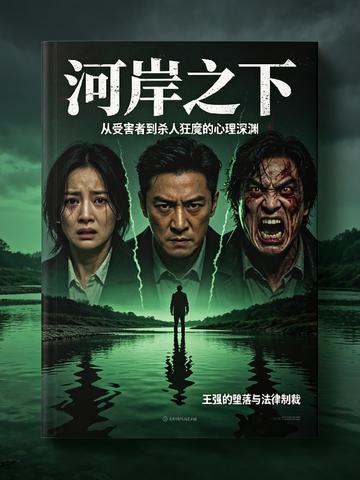
It tells the story of a man facing his fate three times.
In the winter when he was eight years old, Wang Qiang was hung from a jujube tree. The north wind blew him away, and he lay in the snow all night. The person who climbed out of the snow became a different person. In the next twenty-three years, from the first stab on Taiyuan Street to the countless nights at the South Canal, he killed all the way along the river bank until the gunfire rang out at the execution ground.
The story could have ended there. But after the gunshot, Wang Qiang found himself standing at the entrance of the alley on Taiyuan Street in 1993 - not a resurrection, but a time travel. He became his own shadow, standing three steps away, looking at his young self squatting in the darkness, holding the fruit knife he just bought in his hand. He tried to stop him and threw countless grains of sand into the river of time, but found that the harder he tried, the harder the man would kill. This was a war between himself and himself, and he was doomed to lose from the start.
Until finally, the eight-year-old child opened his eyes from the kang.
It's all a dream. After being hung from the jujube tree, he was in a coma for three days and three nights. He dreamed that he had lived for thirty-one years, killed people, went to jail, was shot, and traveled back in time to try to stop himself. Now that he is awake, the marks on his wrists are still fresh. His grandma is kneading noodles at the stove, and his brother is crying in the yard. He was eight years old and his whole life had not yet begun. But he had lived it once, no, twice.
This time, he didn't pick up the knife.
"River Bank" is a novel about "choice". It asks: Is it possible for a person not to be himself? If you were given a second chance, would you still go down the same path?