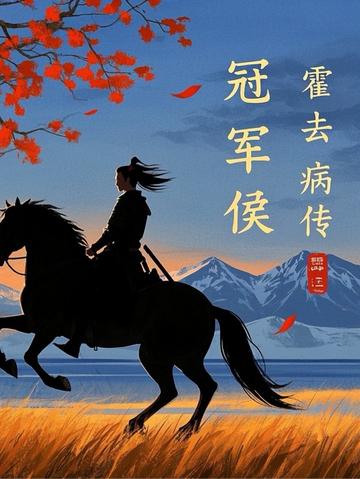
I grew up beside Maoling, climbing the stone horses in front of Huo Qubing’s tomb when I was little. Only later did I learn that beneath that tomb, shaped like the Qilian Mountains, lay a young man of just twenty-three. He was born out of wedlock and lived in the stables of Princess Pingyang’s estate until he was ten. At seventeen, he led eight hundred cavalry deep into the grasslands, killed two thousand enemies, captured the Chanyu’s uncle, and was granted the title Marquis of Champion. At nineteen, he led two campaigns in Hexi, crossed snow-capped mountains, and opened the Silk Road. At twenty-two, he led fifty thousand elite cavalry two thousand li into enemy territory, performed the Feng and Shan rites at Mount Langjuxu, watered his horses in the North Sea, and planted the Han banners on the sacred mountain of the Xiongnu. At twenty-three, he died. The histories record only his victories. They never tell us what he thought while riding, what he feared in the dead of night, or how lonely he felt amid the cheers of thousands. This book seeks to answer a question: What price must a young man pay to become the god of war in the eyes of later generations? “The Xiongnu are not yet vanquished. How can I think of home?” When he said those words, he did not yet know he had only six years left.