The First Emperor had more than twenty sons.
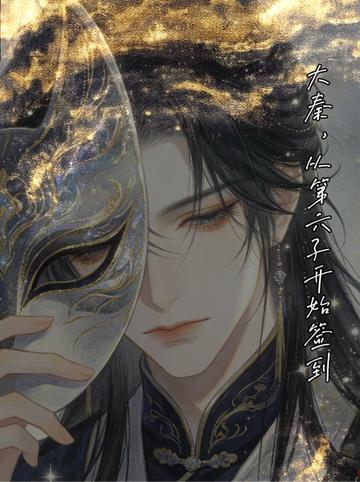
Ying Che ranked sixth.
His mother died young and his family withered, living like a shadow in Xianyang Palace.
Until he bound a sign-in system.
The main hall of Xianyang Palace, sign in reward: the entire map of the empire.
A Shaofu craftsman serves as the supervisor, and the reward for signing in is Quyuanli's drawings.
Lishan Mausoleum construction site, sign-in reward: the method of project coordination.
At the top of Mount Tai, the sign-in reward is: a five-stone strong bow that can penetrate the Yang with a hundred steps.
From the Pianyuan to the Shaofu, from Xianyang to the northern border, from the sixth son who no one cares about to the first emperor blurting out "the sixth son is like me".
He has walked this road for twenty years.
Not to win the heir, but just because when the man raised his head and looked at him, his eyes no longer looked at the weight of a piece of meat.
But look at the eyes of a son.
——
The First Emperor: My son does not need to wear clothes with frayed edges.
Fusu: Sixth brother, you don't know what it's like to be watched by everyone. Before it was just me. Now, there is you.
Zhang Han: The Sixth Young Master is the second person I have seen in the past twenty years who is both capable and not greedy for merit.
This is the story of a concubine who stepped into the sunshine step by step in the Qin Empire.
There is no one step to reach the sky, only iron and fire, earth and blood, and the three hundred-step-long path of Xianyang Palace.
He has been gone for twenty years.
---
Reader comments
This book is very good. I was surprised to see a book of this style on Tomato. The text in this book is very quiet and calm. There is no laughter or curses. Every sentence of dialogue is focused. It seems that no one is chatting. This kind of writing is actually quite a test for readers. It requires a certain amount of patience and determination. It is not easy to read fast food literature if you are used to tomato, but it is really good if you have the patience to read it.
I clicked in because of Zulong. I like the author's creation of characters. There is no other time-travel novel that throws history in front of the First Emperor like that, and then throws in some practical inventions. It seems that history can be changed in this way. It's like a PUA, first using the tragedy of history to crush Zulong's knowledge, and then using the knowledge of the next few thousand years to seduce Zulong. Many people write Fusu, Zhao Gao, Li Si and other figures whose names are recorded in history books as if they are one-sided fools, but the author does not. The Fusu he writes is kind but not pedantic, gentle but down-to-earth, gentle but courageous, which is really rare.
Worth reading
The author writes quite well about the relationship between the First Emperor and his sons, but it may be because of some loopholes in the previous part that make it feel a bit disconnected. The common people of the Qin Dynasty did not have surnames. Officials in the Qin Dynasty that emphasized agriculture and suppressed the Shang Dynasty may implement land annexation, but it is impossible for their family to be named as a merchant openly, especially since this family is still the Meng family. Moreover, not long after the reunification of the Six Kingdoms, Meng Tian and Wang Jian were unlikely to blatantly annex land in such a huge amount.
This book is very good. I was surprised to see a book of this style on Tomato. The text in this book is very quiet and calm. There is no laughter or curses. Every sentence of dialogue is focused. It seems that no one is chatting. This kind of writing is actually quite a test for readers. It requires a certain amount of patience and determination. It is not easy to read fast food literature if you are used to tomato, but it is really good if you have the patience to read it. I clicked in because of Zulong. I like the author's creation of characters. There is no other time-travel novel that throws history in front of the First Emperor like that, and then throws in some practical inventions. It seems that history can be changed in this way. It's like a PUA, first using the tragedy of history to crush Zulong's knowledge, and then using the knowledge of the next few thousand years to seduce Zulong. Many people write Fusu, Zhao Gao, Li Si and other figures whose names are recorded in history books as if they are one-sided fools, but the author does not. The Fusu he writes is kind but not pedantic, gentle but down-to-earth, gentle but courageous, which is really rare. Worth reading The author writes quite well about the relationship between the First Emperor and his sons, but it may be because of some loopholes in the previous part that make it feel a bit disconnected. The common people of the Qin Dynasty did not have surnames. Officials in the Qin Dynasty that emphasized agriculture and suppressed the Shang Dynasty may implement land annexation, but it is impossible for their family to be named as a merchant openly, especially since this family is still the Meng family. Moreover, not long after the reunification of the Six Kingdoms, Meng Tian and Wang Jian were unlikely to blatantly annex land in such a huge amount.