He won battle after battle, yet the histories called him “brave but witless.”
He was an expert at paperwork, accounting, horsemanship, and training soldiers, yet the histories remembered only his “prowess with bow and horse.”
Every one of his betrayals had its reasons, yet the histories summed him up in four words: “servant of three masters.”
Lü Bu, a wolf raised beneath the frontier walls of Jiuyuan.
At ten, he lay in the snow and learned military strategy from a blind old wolf. At sixteen, he understood the value of “reputation.” At seventeen, as a cavalry commandant, he routed the Xianbei. At nineteen, Ding Yuan promoted him to chief clerk. A warrior from the borderlands had forced his way onto the gentry’s playing field.
He knew how to fight, and he knew how to count.
He understood horses as if by magic, and he understood people’s hearts.
He was quiet, but never confused.
And yet
In the gentry’s version of events, he would always be a “boorish soldier.”
In the historians’ accounts, he would always be a “faithless villain.”
In later legends, he would forever be the god of war who was “brave but witless.”
No one ever asked: Who wrote history?
Why would a victorious general be written off as brave but witless?
Why was every choice reduced to “betraying his principles for profit”?
Why were the victors, who spoke endlessly of benevolence and morality, filthier than him, yet portrayed as purer?
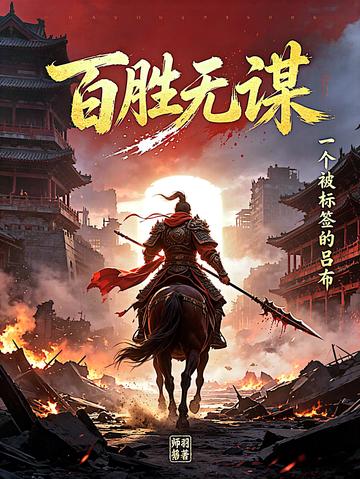
This is not a book that whitewashes Lü Bu.
It is a book that questions how history defines its figures.
Open its pages, and you will see:
How a frontier boy who crawled out of the snow fought for his life with both blade and pen.
How a true soul buried beneath labels let out one final wolf’s howl atop White Gate Tower.
“They say I’m brave but witless.
But I beat everyone. The only thing I couldn’t beat was a pen.”
An astonishing book, the author's conception and writing style are of a very high standard! Lu Bu can be said to be a figure who has been slandered quite badly by various unofficial histories and the Three Kingdoms. Influenced by the Three Kingdoms, most people's inherent impression of Lu Bu is that he is greedy for money, lustful, brave and foolhardy. But I have always been puzzled. If someone is really brave and foolhardy, how can he gradually become the overlord of a party and leave his name in history (don't worry about the name). Ordinary people would have been dead in that era, right?
Compared with the family background of Sun Quan and Cao Cao, Lu Bu can be called a natural disaster. Even Liu Bei has the blessing of being a clan member of the Han Dynasty. The author is also one of the few people who has broken down the gap between the common people of poor families and the noble families, and reasonably supplemented and analyzed the deep-seated motivations of Lu Bu's actions.
Of course, it may be that I am overthinking it, but there are very few texts about Lu Bu himself, and even fewer words that are used fluently. Come on, author.
A good book, a more realistic description of Lu Bu, worth reading.
An astonishing book, the author's conception and writing style are of a very high standard! Lu Bu can be said to be a figure who has been slandered quite badly by various unofficial histories and the Three Kingdoms. Influenced by the Three Kingdoms, most people's inherent impression of Lu Bu is that he is greedy for money, lustful, brave and foolhardy. But I have always been puzzled. If someone is really brave and foolhardy, how can he gradually become the overlord of a party and leave his name in history (don't worry about the name). Ordinary people would have been dead in that era, right? Compared with the family background of Sun Quan and Cao Cao, Lu Bu can be called a natural disaster. Even Liu Bei has the blessing of being a clan member of the Han Dynasty. The author is also one of the few people who has broken down the gap between the common people of poor families and the noble families, and reasonably supplemented and analyzed the deep-seated motivations of Lu Bu's actions. Of course, it may be that I am overthinking it, but there are very few texts about Lu Bu himself, and even fewer words that are used fluently. Come on, author.
A good book, a more realistic description of Lu Bu, worth reading.