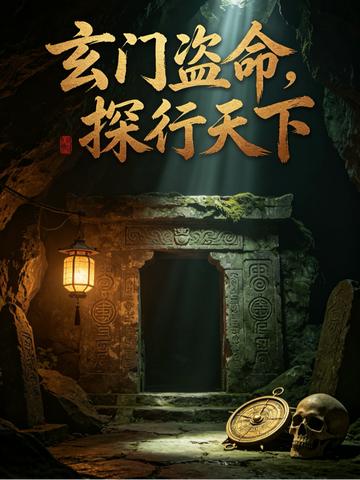
Before his grandfather died, he left him with one warning: “There’s a tomb in Yunnan. Don’t go there.”
Shen Du kept that promise for seven years, running an inconspicuous antique shop in Liulichang, until a woman named Jiang Wan came looking for him. She brought a bronze sword engraved with the words “Sand Sifters,” and a story his grandfather had refused to speak of until his dying day: an ancient sect called the Sand-Sifting Sima, half of a bronze tiger tally whose purpose was unknown, and a jade celestial disc unearthed from a Warring States ship-coffin tomb.
The patterns on the jade disc are no decoration. They depict a star chart recording the 2,400-year path of the Tianshu star, ultimately pointing to a coordinate that should not exist: a dark red star beneath the Big Dipper, like its reflection.
The ancestral precepts of the Faqiu lineage say: “Tianshu has a shadow; its shadow falls on Yunnan. Where the shadow lands, there lies a tomb.”
And his grandfather had been inside that tomb.