[Slow heat + invincibility + non-template cool text + dual-line narrative + thousand-year revenge + apocalypse + strange monsters + decisive killing + no female protagonist]
It requires a little patience. The transition to the worldview in the early stage is a little slow, but the follow-up is guaranteed to be exciting.
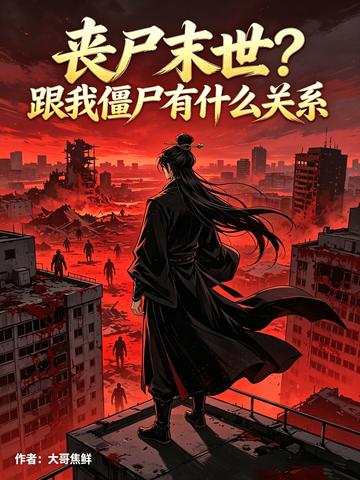
Two-line narrative. The end of the modern world, ancient Dayin. He is an immortal zombie two thousand years later, and a child picked up from a mass grave by an old Taoist priest two thousand years ago.
Others pick up trash, fight zombies, and survive in the apocalypse.
He has no temperature, no sense of taste, and destroys heaven and earth.
But he would catch the children who fell from the stairs, break bread to the hungry little girls, and stand alone in front of the tide of corpses when the human race was about to become extinct.
Everyone is afraid of him, everyone depends on him.
No one knows that he has lived for two thousand years, just to find the master who picked him up from the mass grave.
No one knows that the most powerful monster in the world actually wants to be an ordinary person most.
Reader comments
It is now updated to Chapter 27.
Advantages: The two themes that combine zombies and undead are very interesting and attractive; the ancient plot line is very interesting and the characters are brought to life; the modern plot line introduces the "Corpse God Cult", an evil force that has lasted for more than two thousand years.
Disadvantages: The modern story line is a bit bland and does not have the apocalyptic atmosphere; the male protagonist is not set to become a bone zombie, but his performance is a bit stretched, and he is not as awesome as Klass in the setting; the righteous way in the ancient line is too stretched, and the foundation of the righteous way is not seen.
Overall, it's still very good. There are many questions that make me want to continue reading. For example: How did the male protagonist get turned into a zombie? Why hasn't Zhengdao defeated the Corpse God Cult? Is this apocalypse the work of the Corpse God Cult? What is the official attitude towards the male protagonist?
The two-line plot in the front, especially the transition to the ancient line, was too slow, and I almost gave up the book, but the further back I found it, the more interesting it became. There is no traditional monster-killing and upgrading, and the protagonist's growth path is a matter of course. Although I don't feel much improvement in strength, and I don't have any amazing magical powers, the setting seems to be the end of the law, and the main character's growth is the change in his mentality.
The design of the Japanese plot of refining the three poisons gives a focus on the daily life in the ancient story and the psychological activities in the days when he was hunted down later. Seeing a powerful zombie being guarded as a child, going through hardships, indifference to people when sleeping and waking up, and now having emotions, the psychological growth process of the character is very clear. It's just that many battles are written in a relatively homogeneous way, and the author should think more about this aspect. There are many ways to write about physical combat, right?
Finally, the author did a good job in environment rendering and some atmospheres, but many parts of the first dozens of chapters are too wordy. I hope the author can fine-tune it to improve the reading experience.
To sum up, the content of this book is quite attractive to me. It's really easy to abandon the book after only reading the first half. I don't understand why there is so much foreshadowing that seems to have no meaning. However, after reading more than 140 chapters and the end of the weekend, I suddenly realized that I was brought into the protagonist's growth environment and this disaster, and I suddenly felt the desire to catch up.
The following are the follow-up hooks that I am looking forward to
1. Emperor Yongning was originally the prince, why did he kill his father to seize the throne?
2. In the span of more than two thousand years, in what state was Emperor Yongning alive? Or did he become something like a zombie with the help of the Corpse God?
3. The character of Zao Jun was described a lot in the previous book. It is definitely not a coincidence that the behavior of Zao Man is very similar to that of zombies in the apocalyptic line. But why did this character suddenly disappear? Is it possible that he is still alive? I would feel a little disappointed if this character just disappeared.
4. Daji's current role is too much of a tool. She gives a lot of worldview information, but foxes are naturally cunning. She should not just appear as a tool. I look forward to the author letting her play a greater role in the future.
5. Judging from the few words and my speculation, the godhead in the protagonist's body was snatched away by Haotian, right? This thing currently only has an auxiliary function, and I don't know what will change in the future.
6. The gods returned from the war in the heavens, and then disappeared after the outbreak of the modern apocalypse. Is it related to the corpse god? Because the heavenly masters in the ancient line can invite gods, what is their plan?
I can't recall the others at the moment. The author has laid a lot of foreshadowings. The weapon description of King Kong Barbie is very similar to Odin's Kungunir, and the weapon of the apostle in the Vatican has been clearly stated to be the Spear of Longinus. This means that the god systems of other countries have also been integrated into it. I am very much looking forward to the follow-up development.
One final word, the author will update soon! ! ! ! ! ! [Angry][angry][angry][angry][angry][angry][angry][angry]
It's rare to find someone who is not a time traveler but an aborigine. It's very beautiful. I hope to continue making more.
It is now updated to Chapter 27. Advantages: The two themes that combine zombies and undead are very interesting and attractive; the ancient plot line is very interesting and the characters are brought to life; the modern plot line introduces the "Corpse God Cult", an evil force that has lasted for more than two thousand years. Disadvantages: The modern story line is a bit bland and does not have the apocalyptic atmosphere; the male protagonist is not set to become a bone zombie, but his performance is a bit stretched, and he is not as awesome as Klass in the setting; the righteous way in the ancient line is too stretched, and the foundation of the righteous way is not seen. Overall, it's still very good. There are many questions that make me want to continue reading. For example: How did the male protagonist get turned into a zombie? Why hasn't Zhengdao defeated the Corpse God Cult? Is this apocalypse the work of the Corpse God Cult? What is the official attitude towards the male protagonist?
The two-line plot in the front, especially the transition to the ancient line, was too slow, and I almost gave up the book, but the further back I found it, the more interesting it became. There is no traditional monster-killing and upgrading, and the protagonist's growth path is a matter of course. Although I don't feel much improvement in strength, and I don't have any amazing magical powers, the setting seems to be the end of the law, and the main character's growth is the change in his mentality. The design of the Japanese plot of refining the three poisons gives a focus on the daily life in the ancient story and the psychological activities in the days when he was hunted down later. Seeing a powerful zombie being guarded as a child, going through hardships, indifference to people when sleeping and waking up, and now having emotions, the psychological growth process of the character is very clear. It's just that many battles are written in a relatively homogeneous way, and the author should think more about this aspect. There are many ways to write about physical combat, right? Finally, the author did a good job in environment rendering and some atmospheres, but many parts of the first dozens of chapters are too wordy. I hope the author can fine-tune it to improve the reading experience. To sum up, the content of this book is quite attractive to me. It's really easy to abandon the book after only reading the first half. I don't understand why there is so much foreshadowing that seems to have no meaning. However, after reading more than 140 chapters and the end of the weekend, I suddenly realized that I was brought into the protagonist's growth environment and this disaster, and I suddenly felt the desire to catch up. The following are the follow-up hooks that I am looking forward to 1. Emperor Yongning was originally the prince, why did he kill his father to seize the throne? 2. In the span of more than two thousand years, in what state was Emperor Yongning alive? Or did he become something like a zombie with the help of the Corpse God? 3. The character of Zao Jun was described a lot in the previous book. It is definitely not a coincidence that the behavior of Zao Man is very similar to that of zombies in the apocalyptic line. But why did this character suddenly disappear? Is it possible that he is still alive? I would feel a little disappointed if this character just disappeared. 4. Daji's current role is too much of a tool. She gives a lot of worldview information, but foxes are naturally cunning. She should not just appear as a tool. I look forward to the author letting her play a greater role in the future. 5. Judging from the few words and my speculation, the godhead in the protagonist's body was snatched away by Haotian, right? This thing currently only has an auxiliary function, and I don't know what will change in the future. 6. The gods returned from the war in the heavens, and then disappeared after the outbreak of the modern apocalypse. Is it related to the corpse god? Because the heavenly masters in the ancient line can invite gods, what is their plan? I can't recall the others at the moment. The author has laid a lot of foreshadowings. The weapon description of King Kong Barbie is very similar to Odin's Kungunir, and the weapon of the apostle in the Vatican has been clearly stated to be the Spear of Longinus. This means that the god systems of other countries have also been integrated into it. I am very much looking forward to the follow-up development. One final word, the author will update soon! ! ! ! ! ! [Angry][angry][angry][angry][angry][angry][angry][angry]
It's rare to find someone who is not a time traveler but an aborigine. It's very beautiful. I hope to continue making more.