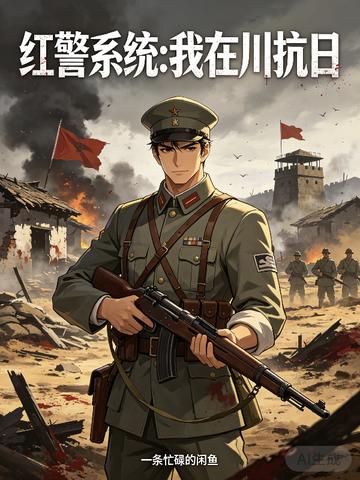
Autumn, 1937. The mountains of Sichuan Province emerged from the mist in dark, iron-gray outlines. It was a year when history crawled along the edge of a blade. The Central Plains were in turmoil, and the flames of war had already reached Shanghai. The Sichuan Army, a force of men in straw sandals carrying old rifles, was quietly assembling, preparing to leave through the Kui Gate and face a national crisis they knew they could not overcome, yet had no choice but to confront. Their silhouettes were about to merge into one of the most tragic shades of China’s War of Resistance, while the torrent of history seemed to follow an inevitable, almost merciless course here.
Yet an unknown ripple was quietly spreading in the depths of that torrent. Its source was no grand declaration, but a power that had arrived by chance, full of contradictions. It called itself the “System,” and appeared as a form of technology beyond its time, almost miraculous in nature. It could construct a sophisticated “factory” out of thin air in a mountain hollow, turn crude straw sandals into durable rubber-soled shoes, and even calculate endless tactical possibilities. It promised its user the power to change the outcome of local battles, like a divine weapon fallen from the heavens. But this weapon had no sheath. Every time it was wielded, it came with cold “energy” readings and a weighing of costs and gains. Save a hundred wounded soldiers, or conserve energy to build a vehicle factory that could determine the fate of many more? The System offered choices, but no answers. This was the first paradox planted in this turbulent world: the very power meant to save and set things right operated by a cold logic that weighed life and emotion on a scale.