Stats
9.5Score
88Chapters
Tags
Synopsis
Reader comments
In booklists 5
The Book with a Score of 9.9 Is Here
239.6MViews148Books10hUpdated
Novels on the Bookshelf
Novels I have read.
59.1MViews484Books19hUpdated
Why Not Read Classics?
Recommend some good books that are meaningful, influential and well-written.
54.6MViews881Books12hUpdated
9.9 High Score Masterpiece
I want to read a book similar to "I'm Not a Drama God". When I first read the book, Is the Drama God Very Strong? Later... There were so many inversions and the logic was so clear that my CPU was running low!
29.7MViews92Books12hUpdated
An In-Depth Article That Can Be Called a Masterpiece
Just like the three-body
12.2MViews388Books14hUpdated
Each article is very short and can be read as a short story. As the author said, it is like reading a short video to "refresh" the novel. It is quite interesting.
Reading this novel is really like watching a short video. It is very interesting and beneficial.
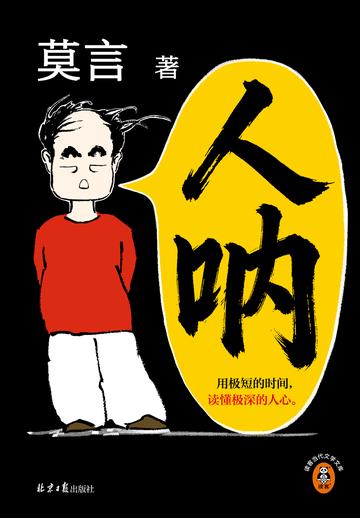
When I first read Mo Yan's "Human", there were more than 80 short stories in total. They were just fragmented market chats. There was no long plot with ups and downs, and there was no grand narrative of the times. But after reading them one by one, I suddenly understood that this Nobel Prize winner uses minimalist pen and ink. , Completed the most profound depiction of the human world. These short chapters suitable for fragmented reading are never simplifications of literature, but transparency after years of accumulation. Every word, they tear apart the true appearance of human nature, and describe all the various conditions of sentient beings and the warmth and coldness of the world.
Mo Yan, this old man who won the Nobel Prize, will show you human nature one by one. After reading it, you will only be able to say two words - human. Balzac said, "Novel is considered the secret history of a nation." I very much agree with this sentence. When we look at history, a few words may determine the fate of many people. The turning of a page may be the end of an era. The novel is not, because it has a strong story-telling. It shows the social customs at that time, people's living conditions, what they like, and what is popular from the side; people's joys and sorrows, and what people in each class of this era pay attention to, will be expressed through one or some representative tasks; the metaphor of the novel or the underlying thing that it wants to express may be the views of some elites living at the same time on this era. A good novel can reveal many things, and because of its literary and artistic qualities, it is popular among all walks of life and will influence people from many different cultures. We often say that "taking history as a mirror can help us understand the ups and downs." However, the scrolls of official history are mostly filled with dynasty changes, power conquests, and institutional evolution. Ordinary people who are swept away by the torrent of the times are often reduced to fluffy numbers or passing footnotes. The core reason why novels can become the "secret history of the nation" is that it completes the "human history" that is absent from official history - it does not record "what major events happened in a certain year", but insists on describing "how people lived during this major event." It dismantles the grand era into fireworks and meals, and restores cold historical narratives into individual lives of flesh and blood, crying and laughing. This is the eternal power of literature to transcend time and space and penetrate classes. Writer Mai Jia said, "If the world wants to understand China, literature is the only way to go, because it represents the position of the people and reflects the reality of life." Good novelists must be people with life experience. They express their feelings and thoughts through the characters in the book, so I think novels are story-based, plot-based, and personalized history to a certain extent. If official history is the skeleton of an era, then novels are the flesh and texture of this era. Official history gives us the outline of the times, while novels give us the warmth and breath of the times. Those life details, emotional folds, and human subtleties that are ignored by the grand narrative are precisely the truest spiritual foundation of a nation. And this background can only be described one by one through stories by writers who are rooted in life and experienced the times. For example, in Mo Yan's book "Human", you definitely cannot understand the detailed living conditions of people in the period we are living in from a historical perspective. This 71-year-old man confessed that he "couldn't stop once I watched the short video, and three hours passed." Instead, he had an idea—he might as well write a novel that would make people watch the short video just like he did! A collection of 81 original stories, the shortest is only 71 words, and the longest is no more than 10,000 words. Most of them can be read in 5 to 10 minutes, and it feels like you can just scratch through it. But these 81 have a sense of unity, 81 stories, 81 kinds of life. In this era filled with short videos and fragmented information, the 71-year-old Mo Yan did not stand up as a literary master to fight against the reading rhythm of the times. Instead, he caught the characteristics of this era in the softest and sharpest way. He turned the "short, flat and fast" content characteristics of the short video era into his own creative language, using extremely concise length to contain the most profound aspects of life. You can read a story on the subway commuting, read a story while waiting for food, or read a story ten minutes before going to bed, but the life outlined in a few strokes will stay in your heart for a long time after you close the book. The 81 stories are 81 windows looking at China today. Behind each window is a vivid aspect of life, a life scene in our era that has not been recorded by official history, but is extremely real. The profound meaning of "Nine-Nine Returns to One" is never the end of the story, but that all stories ultimately fall back to the two words in the title of the book - "Human", a sigh and a sigh, which express all the questions about human nature, life and the times. Suddenly I remembered a song, which felt very appropriate for the occasion: "I turn stories into wine" I turn stories into wine One or two lovesickness and one or two sorrows I respect the difficulty of fate Zaijing, the road of life is difficult I turn stories into wine A moment of sadness and a moment of worry I respect the years like the ocean current Respect the past and never look back I turn stories into wine Who can get drunk with me? Worry and worry well up in my chest and my head I turn stories into wine What do you want if you spend this life? Thousands of rivers and mountains, I will only wait for you This lyric expresses the spiritual core of the book "Human". Mo Yan is like a narrator who talks about wine and wine, brewing 81 kinds of life into 81 cups of wine with different tastes. In each cup, there is hidden the lovesickness and sorrow, sadness and sorrow of ordinary people, as well as the sigh of fate and the awe of the years. When we open this book, it is like sitting across from the narrator, holding up this glass of wine made from stories. What goes into our throats is other people's lives, but what we drink back is our own past and worries. Stories are the best books of advice. When you reason to others, you will inevitably feel like teaching others, and it will not be easy for others to accept it. But the story is different. You can read it as a simple story. If you read this book and this story after you have had a certain experience, you may be able to taste some of it. That is the fate of this book and you. This is the gentlest and most powerful power of literature: it is never condescending preaching, but equal confrontation and companionship. The truth is the answer that others give you, and the story is a mirror handed to you. What you can see in it depends entirely on the road you have traveled, the people you have met, and the things you have experienced. When you read it when you were young, you may have only seen a lively plot; after half your life has passed and you have tasted the ups and downs of life, and you read the same story again, you suddenly understand the helplessness and struggle, relief and unwillingness of the characters in it. This is not because the book has changed, but because your life experience has become the key to understanding this book. The so-called fate with a book is just that you happen to meet yourself at a certain moment in a certain story. Human nature is complex, and people in reality are not so stereotyped. Good guys and bad guys have to be viewed from different angles. Of course, some are really bad, just like a story in this book. They are born bad, and they don't even realize they are bad. There is no such concept in their minds. 🌫 Characters in official history are often labeled as black and white. There are clear distinctions between loyal ministers and traitorous ministers, heroes and cowards. But human nature in reality has never been an either/or binary opposition, but a gray area with countless possibilities. Mo Yan never puts labels on characters. He just writes people as they are, their kindness and sincerity, their selfishness and cowardice, their perseverance in difficult situations, and their wavering in the face of temptation. And the story about "pure evil" pokes at the most secret and poignant truth in human nature: the most terrible evil is never the deliberate evil, but the evildoer himself who doesn't feel that he is doing evil at all. This kind of unconscious evil rooted in cognitive blind spots is hidden in daily trivialities and in the interpersonal relationships around us. It will not be written into official history, but it will be faithfully recorded by literature and spread out in front of us for us to see and alert us. 🏁 Balzac said that novels are the secret history of the nation, Mai Jia said that literature is the only way to understand China, and Mo Yan's "Human" is the most vivid folk secret history of our era. It does not write about earth-shaking grand events, but it describes the joys and sorrows and life of every ordinary person in our era; it does not tell any shocking truths, but it allows us to understand the complexity of human nature, the truth of life, and the era we live in in each short story. 81 Stories, 81 cups of wine brewed with life, a tribute to the endless flow of time, a tribute to the past that will never look back, a respect to every ordinary person who lives seriously in the era, and a respect to the heavy voice hidden between the lines, which can be said in thousands of words - "Human". 💬 After reading these 81 stories, which one impressed you the most? Is it the donkey dealer who lies to others with truth, or is it Xiao Han who thinks about the meaning of childbearing? Is it the ten-year-old "born bad guy" or the unlucky guy who was struck by lightning? Come to the comment area to chat and see if what we read are the same "person".
The stories are humorous and witty, and most of the endings are reversed, either ridiculing, sarcastic, or metaphorical. They describe all kinds of things in the world, including the warmth and coldness of human relationships, true feelings and falsehoods, good and evil, loyalty and treachery hidden between the lines, and even more so in the hearts of thousands of readers!
I really like the feeling of reading novels like watching short videos [laughs][laughs]
Short and concise, it's like watching a short video, each story is independent
After reading this book, each article reflects a different reflection of human nature. You need to think about it and savor it carefully. One of them left a deep impression on me. In the 1950s and 1960s, a talented young man gave up his chance to enter the art troupe because his partner was the daughter of a landlord. He eventually died of drinking pesticide because of his wife's doubts. People can give up a lot for others, but others will only think that your giving up is deserved!
In fact, I am not qualified to comment on this book. I can only read it religiously and learn something from it. If I have to say a few words, it is that we can get a glimpse of the real society, the ever-changing human nature and the wonderful writing from the master's works. I strongly recommend this book, if you can read it without colored glasses.
Thoughts after reading: It was probably a summer night, and I was nestled in my great-grandfather's arms. In my ears I could hear the chirping of insects, the sound of the wind blowing from cattail leaf fans, and a novel story. The eyes are filled with fragmented starlight, layered gauze curtains, and loose skin swaying in the wind. The bamboo mat beneath me felt cool, and I gradually fell into sleep. Or maybe I happened to enter a pergola and saw Pu Songling who was offering a cold drink and asking for a story...
This collection of short stories by Mo Yan is shorter than the mini-novels I read as a student. There are some chapters where the content is very simple, but the meaning that the author Mo Yan wants to express is also very clear; there are some chapters where the expression is just like the author's smile, and I burst into laughter after reading it. I don't know how to think about the meaning conveyed by it, and I have no intention to think about it; there are some chapters where it feels like it stops abruptly, which is a bit inexplicable, and I really don't understand it; but the last one is simple, and it seems that it is really the meaning of life, and I think it is a bit interesting. As the saying goes, a thousand people have a thousand Hamlets. The biggest advantage of the short film is that you can watch it whenever you want, and you can stop it at any time without worrying about the plot inside.
In the era of short videos, it is difficult to calm down and read long stories. Reading this book, I feel like I have returned to the era of Yilin and readers. Some stories are still not fully understood even after they were founded. Maybe I will be able to understand the secrets at some point in the future.
Every paragraph feels unfinished. Maybe this is the purpose of short stories that Teacher Mo Yan wants to express, to let you read with your eyes, think with your brain, and use your unlimited imagination🤣
Very interesting article, worth learning from
Diverse materials, real and interesting, simple language, versatile
I read Mo Yan's book more than ten years ago, and reading it now has a different flavor. The winner of the Nobel Prize for Literature is indeed worthy of his name. He uses a humorous style to imitate Liaozhai prose. Although the length is short, it makes people appreciate it carefully. Recommended [laughs]
A short story, but a long aftertaste.
The story is short, but very interesting. As a person who cannot read books, I can keep reading. Indeed, as Mo Yan said, it is like watching short videos.
This book is so good, it's like watching a short video. Each story is short and concise and deeply rooted in people's hearts.
Teacher Mo Yan's book has a short story, but it has profound meaning! It's easy to read.
People who understand human nature will have no trouble reading this book! Naive people will feel a little uncomfortable reading this book!
What this old man wrote seems to be from far and wide, but in fact many of the stories happen around us. Not only entertaining, but also informative. It also helps improve your reading. It's helpful to open the book!
It's witty and humorous, but also has some irony and depth. It's a very good short article. Pretty good little story
No need to buy books, there are subtitles and readings! Awesome!
Objectively and realistically describes all aspects of life. I have the same feeling. Sometimes there are inexplicable whims about the inconspicuous little things in our lives, but I don't know where the wonder is? After reading this book, I gained further understanding.
The writing is humorous and endlessly interesting. Interlocking and exciting.
Thoughts are like underwear, you must have them, but you cannot prove that you have them when you meet everyone.
Humor contains the wisdom of life
Every little story contains profound truths
Every story is worth savoring again and again