What would happen to history if the Ming dynasty had possessed a map of the world three hundred years ahead of its time?
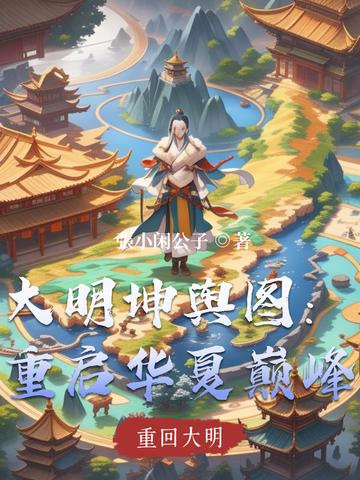
Ming Tianyi, an ordinary history researcher, unexpectedly transmigrates into the chaotic final years of the Ming dynasty. He brings with him an era-defying map, the Great Ming Map of the World, which precisely marks the five continents, three oceans, and every undiscovered treasure and sea route.
This is not one person's transmigration, but the simultaneous upheaval of three parallel timelines.
In the timeline where the empire's borders are reshaped, he helps the beleaguered Ming dynasty rebuild its military, sweeps away the Eight Banners with innovations in firearms, and launches naval expeditions to reclaim Taiwan. He plants the sun-and-moon banner across every inch of land shown on the map, making colonizers bow in submission and bringing every global sea route under Chinese control.
In the timeline where civilizations break through their barriers, he uses irrefutable evidence to disprove the fabricated history of Western-centrism and joins forces with Eastern nations to establish a civilizational alliance. Confucius and Aristotle engage as equals, while the Four Great Inventions rewrite the history of world technology.
In the timeline where ancient texts are brought to light, he ventures alone into the Vatican to reclaim the sealed Yongle Encyclopedia and other ancient Eastern books. He restores the truth of a civilization that had been tampered with, letting Chinese wisdom once again illuminate humanity's path forward.
This is no wish-fulfillment fantasy, but a hard-hitting reconstruction of history. This is no power fantasy about transmigration, but a civilization's desperate counterattack.
When every inch of land on the map resounds with the Chinese language, and the power to judge the world's civilizations returns to the East, all the lands touched by the sun and moon shall belong to the Great Ming!
Upheaval, breakthrough, restoration: three realms move in parallel as China's glory is reborn.
There is a depth of history narrated and a reluctance to face the collapse of the Ming Dynasty. The weight of history is mixed with the protagonist's determination to turn the tide. The writing is good, with foreshadowing and extension. I can see the historical accumulation of China's peak, and also the domineering power of Chinese civilization to unify the mountains and rivers and return to its peak.