"Mother in the Refrigerator" reconstructs modern legends and monsters using Liaozhai style, and uses the siege narrative to describe the game of human nature in the digital age. It is a masterpiece with realistic themes that combines refreshing feeling, warmth and ideological depth.
In 2026, on the first anniversary of her mother's death, Internet censor Lin Wan accidentally discovered her mother's complete sealed consciousness in the old refrigerator at home. At that time, the "Yijing" AI memory system that monopolized the country was planning to forcibly erase all "unofficially certified" folk memories at the end of the year. She uses the refrigerator as a fortress and maternal love as armor. In the digital siege built by capital, she fights against the conspiracy of memory cleansing and protects the real lives that have been suppressed, disciplined, and forgotten.
The work uses "digital reverberation" to reconstruct classical monsters, and each unit story is a mirror image of various situations in the human world; it uses "memory game" to reproduce the ultimate speculation of "Fortress Besieged" and reveal the truth about technological alienation and capital monopoly. The chapters are exciting, and the volumes are reversal and upgrade. It is not only a thrilling battle of counter-attack, but also a reconciliation between mother and daughter that spans life and death, and an ultimate inquiry into "truth and forgetfulness".
Reader comments
The Liaozhai style of writing reconstructs modern legends and monsters, and the siege narrative describes the game of human nature in the digital age.
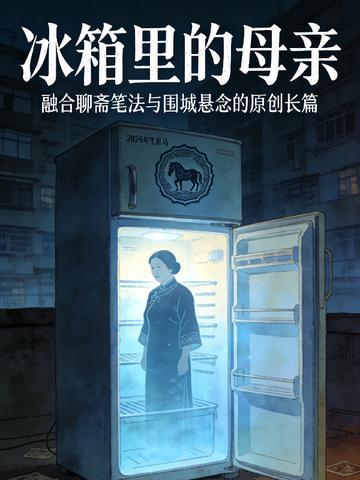

The Liaozhai style of writing reconstructs modern legends and monsters, and the siege narrative describes the game of human nature in the digital age.