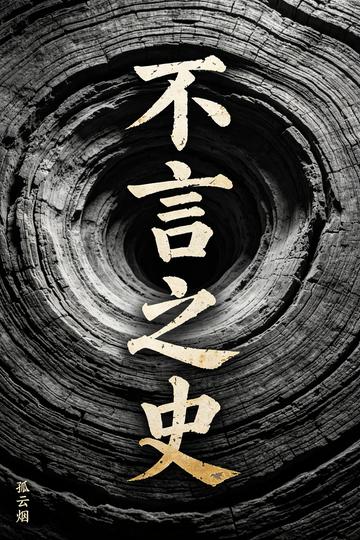
In five thousand years, he changed his body countless times and experienced the strangeness and adaptation after each rebirth. He cannot speak, cannot intervene, cannot remind, cannot save. He just stood on the edge of the crowd and watched everything happen. He saw Yu dredging the Nine Rivers in thirteen years, saw Qi creating the world, saw Taikang lose his country, Shaokang was resurrected, he saw Kong Jia disrupt the government, and Xia Jie subjugated the country. He saw Shang Tang raising the battle flag in the Battle of Mingtiao, saw King Zhou burning himself on the Lutai, and saw the Duke of Zhou vomiting food and the world returning to its heart. He saw Emperor Qin, Emperor Wu of Han, Emperor Zong Tang and Song Zu, saw Genghis Khan's cavalry traveling across Europe and Asia, and saw the prosperity and decadence of Kangxi and Qianlong. He saw the artillery fire of the Opium War opening the country, the gunshots of the Revolution of 1911 that ended the monarchy, the unyielding figure in the anti-Japanese war, and the flag flying at the founding ceremony of the People's Republic of China.
He has seen the nation's brightest light and its deepest darkness. He is the eye of history. He cannot speak, but he is present. This is a person's epic and a nation's memory.