On the day of time travel, people were raining from the sky.
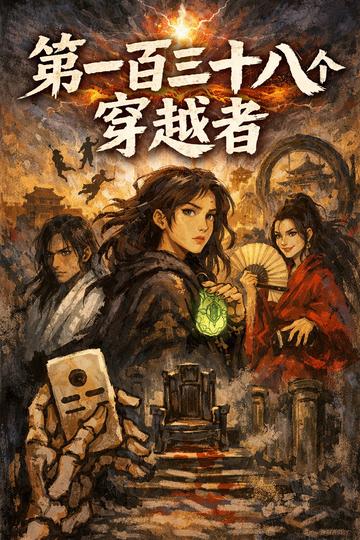
A total of one hundred and thirty-eight travelers were thrown into the same ancient world at the same time with a ray of white light.
And I am the last one.
Among the first one hundred and thirty-seven, some people died as soon as they landed, some were wiped out with their systems, and some thought they were the protagonists of destiny, but in the end they didn't even survive the next day.
I should have died too.
Until I picked up a jade pendant that shouldn't belong to me from the pile of corpses in a mass grave.
After the system started, it only gave me one sentence:
——Assisted the 138th time traveler to ascend the throne and proclaim himself emperor.
But the question is, who is the real number 138?
Is he the modern man in Domino's first photo?
Is it the girl in red who is fighting for her life with a smile?
Is he the white-coated candidate who is gentle and calculating and takes every step of the way?
Or is it the Xie Heng who died long ago but still refuses to be eliminated?
Later I learned that the so-called "number 138" was not a person at all.
That is a "position" that will determine which way the world collapses.
And I am not the protagonist.
I was the one that everyone was looking at - the license holder.
They wanted to take advantage of me, force me to choose, and steal the first pointing right from me.
But what if I don't let them get what they want?
Then break the situation first.
Overthrow the candidates, systems, old doors, truth, and all self-righteous destiny.
In this game, I don't believe in the protagonist.
I only believe in the last person who survives.
Reader comments
What impressed me most about "The 138th Traveler" was not the size of the setting, but the precise question it asked in the end: Should people be written as a "standard answer"?
The first part looks like a suspenseful and strange story, but the middle part is a game of rules. The further you go, the more you can feel that the real power of this book is not the reversal, but that it is always guarding against one thing - preventing the world from pushing "the most suitable people" to it, and preventing living people from being pressed into samples, numbers and templates. Shen Zhiyan, Xie Heng, Zhou Jiming, Wen Ling, and Gu Tingshan are not tool men. They have all struggled and rejected in their respective positions, and together they have dismantled the "only answer" thing.
I love how it lands at the end: not who wins the system, but someone who finally makes the world understand that some people don't deserve to be written as answers. This core is very restrained and has great staying power. After reading it, you won't just feel "set up", but you will actually feel a little bit hit.
What impressed me most about "The 138th Traveler" was not the size of the setting, but the precise question it asked in the end: Should people be written as a "standard answer"? The first part looks like a suspenseful and strange story, but the middle part is a game of rules. The further you go, the more you can feel that the real power of this book is not the reversal, but that it is always guarding against one thing - preventing the world from pushing "the most suitable people" to it, and preventing living people from being pressed into samples, numbers and templates. Shen Zhiyan, Xie Heng, Zhou Jiming, Wen Ling, and Gu Tingshan are not tool men. They have all struggled and rejected in their respective positions, and together they have dismantled the "only answer" thing. I love how it lands at the end: not who wins the system, but someone who finally makes the world understand that some people don't deserve to be written as answers. This core is very restrained and has great staying power. After reading it, you won't just feel "set up", but you will actually feel a little bit hit.