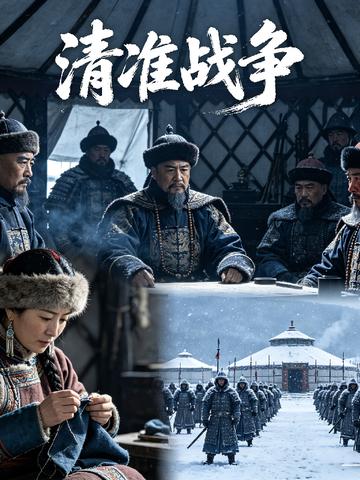
Taking the "Qingzhun War" from the Battle of Ulanbutong in 1690 to the defeat of Amursana in 1757 as the historical axis, it inherits the spirit of "grand narrative embedded in individual destiny" in "War and Peace", and integrates the iron blood of the grassland, the machinations of the palace and the warmth of the market. It not only restores the magnificent battles of Kangxi's three expeditions to Galdan, Yongzheng's fierce battles and Tongbo, and Qianlong's pacification of Ili, but also deeply depicts the love, hate, struggle, and reconciliation of the Mongolian, Han, and Tibetan people in the wave of "unification."