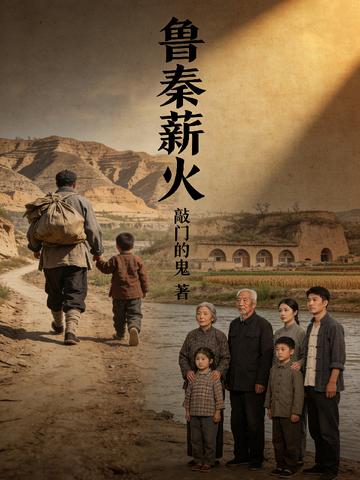
In the third year of Guangxu (1877), there was a severe drought in Shandong, and Zhao Dehou fled west to Guanzhong with his wife and children. When they arrived at Tongguan, his wife starved to death, and Zhao Dehou carried his son Zhao Shuanzhu alone to the Wei River. He survived by carrying labor and burning kilns, and raised his son until he was 13 years old. He eventually died of illness due to overwork. Zhao Shuanzhu was adopted by shopkeeper Han who ran an oil shop. He married the Han family and gave birth to three sons and two daughters: Zhao Jiaren, Zhao Jiayi, Zhao Jiali, Zhao Jiamei and Zhao Jialan.
From the late Qing Dynasty to the 21st century, the Zhao family experienced warlord wars, the Anti-Japanese War, the Liberation War, land reform, the Cultural Revolution, and reform and opening up. The three sons took different paths: the eldest joined the National Army, the second went to the Eighth Route Army, and the third guarded the land; the two daughters each had their own joys and sorrows. The family struggled in hardships, ups and downs in the torrent of the times, and finally maintained its roots and multiplied into a large family of more than 200 people by the Wei River.