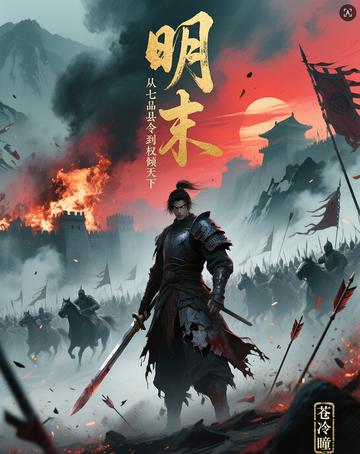
During the Chongzhen period of the Ming Dynasty, the north wind was blowing hard in small border counties. Qin Lie, a modern history intern teacher, woke up from a dream and became the county magistrate here. Even though he has thousands of historical allusions in his mind, in front of him is the people's livelihood is in decline, tyrants are rampant, and border troubles are imminent.
Qin Lie knew very well that in this apocalyptic world where the imperial power was declining and internal and external troubles arose, his body would be shattered into pieces if he was not careful. Using modern knowledge as a blade, he worked step by step in the undercurrent of the county government, skillfully dealing with the intricate squires, and even set up a cunning plan when the cavalry outside the city was pressing the situation, outnumbering the enemy. Every plan is walking on a tightrope, and every breakthrough makes the court look at him with suspicion.
However, Qin Lie understood that this was just the beginning. What he has to face is not only the local powerful and the northern cavalry, but also the inevitable fate of the entire dynasty. In this precarious era, can a scholar from later generations use what he has learned to save the world?
Reader comments
Good. Just an average plot!
Just started going over and over again. I talked about it in the previous chapter. I will change it and add some points in the next chapter.
Can the Ming Dynasty succeed? Chongzhen has no ability. If things go wrong, he blames others. His character is suspicious. Civil servants are not successful enough and fail more than they are, and they are not loyal.
Good. Just an average plot!
Just started going over and over again. I talked about it in the previous chapter. I will change it and add some points in the next chapter.
Can the Ming Dynasty succeed? Chongzhen has no ability. If things go wrong, he blames others. His character is suspicious. Civil servants are not successful enough and fail more than they are, and they are not loyal.