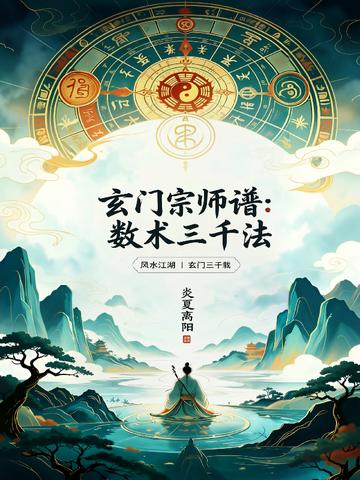
From the establishment of sects of witchcraft and divination in the pre-Qin Dynasty, to the formation of Kanyu techniques in the Qin and Han Dynasties; from the division of sects in the Tang and Song Dynasties, to the integration of the Ming and Qing dynasties, to the evolution of Taoism in modern times - a metaphysics epic that spans three thousand years of China, including Feng Shui, numerology, physiognomy, Dunjia, and choosing the day. The legendary life of 117 metaphysics masters from all dynasties slowly unfolds.
This is a history of metaphysics that does not see the light of swords, but is thrilling at every step.
In the pre-Qin Dynasty, the Nine Heavens Xuannv taught the Yellow Emperor the Qimen Dunjia to help him pacify the world; Qingwuzi wrote the "Qingwu Jing", creating a line of Feng Shui, leaving behind the eternal road of "surrounded by mountains and water, hiding the wind and gathering Qi"; Guiguzi hid in Guigu, watching the Qi and pulse, and gaining insight into destiny and personnel. In the Spring and Autumn Period, Wu Zixu planned the ancient city of Suzhou; Fan Li engaged in business, gathering and dispersing wealth; during the Warring States Period, Chuilizi accurately predicted that the palace would be built between tombs a hundred years later, which became a prophecy.
In the Wei and Jin Dynasties, Guo Pu wrote "The Book of Burial", which defined the word "Feng Shui" for the first time and was regarded as the originator of Feng Shui by later generations; in the Sui and Tang Dynasties, Yang Junsong went down the mountain to help the poor and founded the Xiang Sect.
In the Song Dynasty, Chen Tuan slept in Huashan Mountain, integrating Yi studies and Feng Shui; he traveled around the world in cloth clothes, setting up official Feng Shui bureaus, and was full of chivalry. In the Ming Dynasty, Liu Bowen cut the dragon's veins and established the country. Liao Junqing personally selected the Ming Tombs to be auspicious land for the emperor for thousands of years. In the Qing Dynasty, Jiang Dahong founded the Xuan Kong sect, and Shen Zhurong wrote books and spread the Xuan Kong technique to future generations.