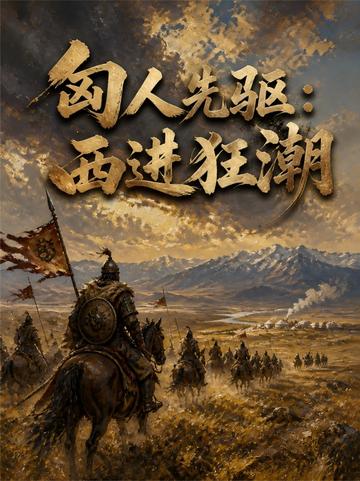
After Dou Xian defeated the Northern Xiongnu in 89 AD, the remaining Northern Xiongnu were forced to move westward, following the path of the Mongolian Plateau→Central Asia→West Asia→European Danube River Basin, starting a migration path across Europe and Asia. This historical background profoundly affected Tiele's life, promoting his growth from a tolerant little leader to a Eurasian hegemon.
The wave of refugees and wars caused by the Huns' westward migration put Tiele's Iron tribe (the remnant line of the Northern Huns) in danger of genocide, forcing him to awaken and make a vow to move westward to survive. Along the path of westward migration, he drew on the integration logic of the Huns' tribes, conquered the Black Sand, Baishui and other tribes, defeated the Central Asian overlord Gaida, and unified Central Asia. Later, he marched into Europe, absorbed the advantages of Roman and West Asian civilizations, transformed his army, defeated the Germanic tribes, severely damaged the Roman coalition, and marched to Constantinople.
The collision of civilizations during the westward migration made Tiele abandon the simple thinking of war, implement a pluralistic governance model, and complete his sublimation from conqueror to founder of civilization. Its growth trajectory fits the history of the Huns' westward migration. It is the epitome of the remaining Northern Huns seeking living space and impacting the Eurasian pattern. It has both historical background and core plot.
Reader comments
Not nomads. People who have never been to the grassland. It is impossible to describe the forthright and forthright true temperament of the nomads. No matter how you look at it, it doesn't smell like that.
Not nomads. People who have never been to the grassland. It is impossible to describe the forthright and forthright true temperament of the nomads. No matter how you look at it, it doesn't smell like that.