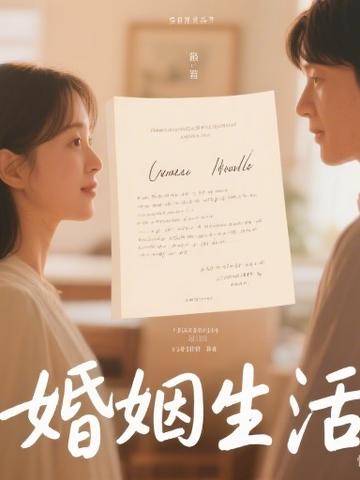
Time flies, time flies, and in the blink of an eye, I got married. Life after marriage was much worse than I imagined. I thought that it would be okay no matter who I was with, but in fact it was not like this. Life after marriage has gone beyond my initial expectations. I always thought that I would be free after I escaped from my original family, but the real suffering seemed to have just begun. I thought... It seemed that it was really just what I thought.
· "In this marriage, we are both polite. So polite that we are like two strangers."
· "I thought that not being loved would not hurt me, but later I realized that not being loved is the deepest hurt."
· "He gave her a marriage, but left love as a memory."
· "The sun was very sunny on the day of the divorce, so good that people felt that separation was a kind of kindness."
· "I didn't lose to another woman, I lost to his past."
· "Thank you for letting me know what it feels like to be loved. And thank you for letting me know what it feels like not to be loved."
Reader comments
The language is calm and rhythmic. Accumulate strength in restraint and release it at the right time. The recurring images - oranges, green radish, red cloth strips, egg yolk cakes - are not a simple accumulation of symbols, but constantly acquire new levels of meaning as the plot progresses. Rhythmically, the second half is a bit smoother. After the successful operation, the focus of the narrative shifted from "fighting the disease" to "running daily life". This is the right direction in itself, but the contradictions of daily life are handled too mildly, lacking the tension of the confrontation with fate in the first half.
In terms of overall value, this is a work with healing power. It makes readers believe that love can grow in the smallest of spaces - on the bench in the corridor, in the pill box after the medication has been reduced, on the glass blurred by moisture on New Year's Eve. This is not a book that teaches people how to love, but a book that tells people "you have loved well enough."
The language is calm and rhythmic. Accumulate strength in restraint and release it at the right time. The recurring images - oranges, green radish, red cloth strips, egg yolk cakes - are not a simple accumulation of symbols, but constantly acquire new levels of meaning as the plot progresses. Rhythmically, the second half is a bit smoother. After the successful operation, the focus of the narrative shifted from "fighting the disease" to "running daily life". This is the right direction in itself, but the contradictions of daily life are handled too mildly, lacking the tension of the confrontation with fate in the first half. In terms of overall value, this is a work with healing power. It makes readers believe that love can grow in the smallest of spaces - on the bench in the corridor, in the pill box after the medication has been reduced, on the glass blurred by moisture on New Year's Eve. This is not a book that teaches people how to love, but a book that tells people "you have loved well enough."