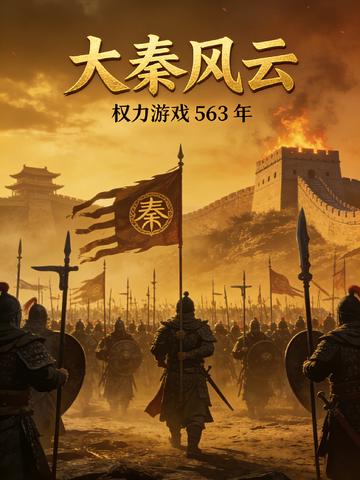
The ancestor of the Qin people was granted the title of Qin Yi by King Xiao of Zhou because of his meritorious service in raising horses, and became a vassal of the Western Zhou Dynasty. When King Ping moved eastward, Duke Xianggong of Qin escorted him with merit, and he was granted the title of prince. He was granted the land of Qixi and officially established the country.
During the Spring and Autumn Period, Duke Mu of Qin dominated Xirong, expanded its territory, and laid the foundation for a great nation. In the early Warring States period, the Qin State was located in the western border and its national power was weak. Qin Xiaogong appointed Shang Yang to carry out reforms, abolished the well fields, promoted farming wars, made laws clear, and implemented prefectures and counties. The Qin State quickly rose to become the master of tigers and wolves.
After that, Qin controlled the wealth of Guanzhong and Bashu, and relied on the danger of Hangu Pass to gradually encroach on the six countries through distant relations and close attacks. After many generations of management such as King Huiwen of Qin and King Zhaoxiang of Qin, the Qin State became independent and powerful.
From 230 BC to 221 BC, King Yingzheng of Qin successively destroyed Han, Zhao, Wei, Chu, Yan, and Qi, unified the world, made Xianyang the capital, and called him the First Emperor. He ended hundreds of years of division and established the first unified centralized dynasty in Chinese history.