Do you have any regrets that Qin failed to unify the world? Have you ever thought that one day, you can change our destiny of not having to learn English? Have you ever imagined what our future would be like if our ancestors unified the world? What regrets do you have about Great Qin, the greatest dynasty?
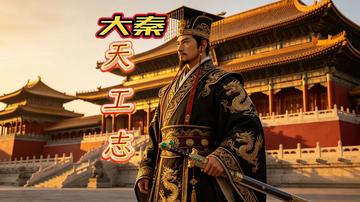
In 221 BC, the Qin Dynasty unified the world and united the four seas. The emperor had great ambitions to win the government through the ages, but he could not escape his obsession with life, old age, illness and death. He indulged in the illusion of alchemists refining alchemy. The glorious Qin Dynasty laid the foundation for the death of the second generation.
Zhao Che, a doctor of modern materials science, accidentally traveled through time and became an apprentice of a down-and-out alchemist in the Qin Dynasty, witnessing with his own eyes that the tragedy of history is about to repeat itself.
The cinnabar contains mercury, the elixir is life-threatening, and the regrets in the history books have turned into a life-and-death crisis before us.
He used modern science as his blade to break the dream of immortality, used empirical evidence to break superstition, and used technology to change the world.
There are no miracles that can be achieved overnight, only hard work brick by brick: unifying process standards, improving iron smelting techniques, building a military industry system, resolving the catastrophe of burning books and entrapping Confucianism, and reversing the fate of Sand Dune Palace.
Dealing with influential figures such as the First Emperor, Fu Su, Li Si, and Meng Tian, he contended with the ambitious Zhao Gao, and moved forward step by step in the court's intrigues and technical challenges.
What he wants to rewrite is not only the lifespan of Qin Shihuang, but also the national destiny of Qin and the direction of Chinese civilization.
With the wisdom of mortals and the principles of heavenly craftsmanship, we can reverse the decline of the Qin Dynasty, build thousands of miles of mountains and rivers, and let the Chinese cultural heritage and imperial hegemony last for eternity.
The content is innovative and has ideas