Su Minglan, a doctor of anthropology, was doing field research at the Shexiang Museum when his fingertips touched an unearthed pottery fragment and was drawn into the vortex of time and space, falling into the hinterland of Wumeng Mountain in the 18th year of Yuan Zhizheng (1358).
That night, with her bare hands, she rescued a mother and her daughter from childbirth.
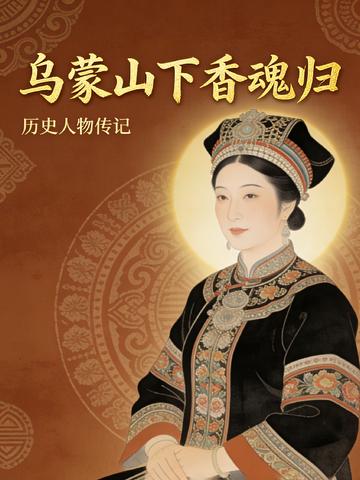
Her mother named her Afeng, a Yi name, to commemorate this "woman sent by the moon." In history books, her name is Shexiang.
From then on, Su Minglan stayed in this Yi tribe as a "cousin". She spent eighteen years accompanying a girl from being a toddler to taking charge of Shuixi. She taught her reading, arithmetic, and engineering principles—planting the first seeds for the path that would follow forty years later.
When her husband died in battle, the powerful were humiliated, and her tribe was angry and wanted to rebel, Feng Yan chose another path: going to Beijing to file a complaint and exchange her scars for a promise.
"I would like to open a post for His Majesty."
A woman, with her tribe, built the Longchang Nine Stations in a desperate situation. Three thousand miles of clouds and moon, nine hundred miles of post road of blood and dust.
And Su Minglan, a bystander from six hundred years later, finally discovered that history is never the cold words written on bamboo slips, but the path that one woman after another walked out inch by inch with blood, tears, and lives.
This is a story about the road. It is also an epic story about a group of women.