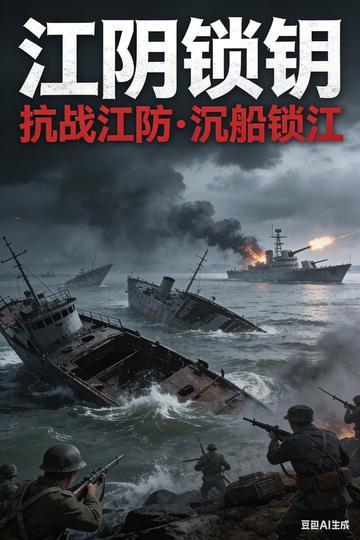
In the autumn of 1937, the Battle of Songhu came to an end. Shanghai, the largest city in the Far East, finally fell after three months of fierce fighting. However, the Chinese military and civilians shattered Japan's arrogant dream of "destroying China in three months" with their own flesh and blood. The Japanese base camp adjusted its strategy and decided to march westward along the Yangtze River, directly taking Nanjing, the then capital, and Wuhan, the future wartime capital, in an attempt to destroy the core of China's war of resistance in one fell swoop.
The Yangtze River, the mother river of the Chinese nation, has now become a strategic channel that determines the fate of the country. The Chinese Navy, a weak force with a total tonnage equivalent to only one-eighteenth of the Japanese Navy, shoulders the mission of using flesh and blood to delay the Japanese army's westward advance. From Jiangyin to Madang, and from Madang to Tianjia Town, Chinese naval officers used sunken ships as cities and mines as blades to build death blockades on the Yangtze River.