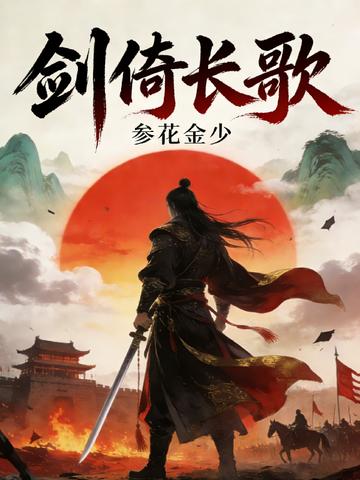
This is not only Li Bai's personal biography, but also an epic of the rise and fall of the Tang Dynasty. The book details his deep love with Xu Ziyan and Zong Yueyao, as well as his grievances and grievances with people from all walks of life, and restores the blood, tears and passion behind "Early Departure from Baidi City" and "Will Enter the Wine". It has both Jin Yong's chivalry and the reality deep in history.
He is a poetic immortal who "can speak half of the prosperous Tang Dynasty with his embroidered mouth", and he is also a Jianghu guest who dares to cut fate with a sword. Throughout his life, he struggled between the court and the arena, between arrogance and abjection. He wrote the legend of the prosperous Tang Dynasty with his poems and swords, and also hid the freedom and tragedy that the Chinese people most longed for.
At the age of 25, he left his relatives and traveled far away, carrying a three-foot-long green sword on his waist and traveling around the world with a pot of turbid wine. The rushing Yellow River became the heroic emotion in his writings, and the dangers of the Shu road transformed the pride in his poems. He broke into Chang'an with the arrogance of "laughing up to the sky and went out", but only left in exchange for the decisiveness of "An Neng can crush his eyebrows and bend his waist to serve the powerful".
Above the court, he was the proud man who let the noble concubine study ink and the powerful man take off his boots; far away in the rivers and lakes, he was a down-and-out poet who drank and sang and made friends with heroes. He had great ambitions to help the world, but accidentally surrendered to the shogunate, and was trapped in the desperate situation of being exiled Yelang; after being pardoned in Baidi City, he took a boat to cross the Ten Thousand Mountains. The line "The boat has passed the Ten Thousand Mountains" is not only a line of poetry, but also his cry for the rest of his life.
There was no smooth road in his life. He only fell from the clouds into the quagmire again and again, and stood up again with his poetry and swordsmanship. From a young man in bright clothes and an angry horse to an old age full of vicissitudes of life, he used his life to compose a swan song of "poetry and wine make the most of your youth", and also left behind the eternal freedom and ease of "you must enjoy your life to the fullest if you are proud".