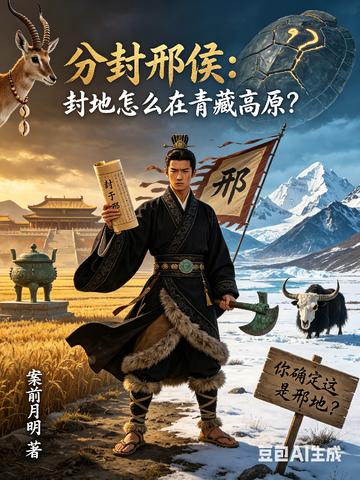
A Ph. D. From the Department of History at Peking University was transformed into Ji Ju, the Marquis of Xing, and was granted the title of Xing Di in the beginning, which was supposed to be the prosperous Central Plains.
But when he looked up, he saw endless snow-capped mountains and thousands of miles of wilderness.
Duke Zhao's divination went wrong, and the fiefdom of Duke Zhou's fourth son was changed to the Qinghai-Tibet Plateau. Surrounded by the Qiang people, not even an inch of grass grows, and the Zhou royal family is beyond reach.
There were no bronze deposits, no cultivated land for farming, and even decent pottery could not be made.
But he remembered-under this plateau, there was jade, copper, and salt.
He wanted to build the strongest city in Jizhou in this snowy land and become the loneliest prince in Western Zhou.
"The Emperor has appointed me to guard the plateau, so I will guard the gate to the West for Zhou."
Reader comments
It is very comfortable to watch so far. Of course, there are some small problems, such as the differences between Chinese and Yi, the integration of ethnic groups, and the writing style is okay. The author used to write short stories, which is very bad. The twists are a bit too blunt. I suggest changing them. The story can be expanded, such as environmental description and character description. During the Zhou Dynasty, there were Asian elephants and Asian bison in Henan. The precipitation and temperature in Qinghai were much higher than they are now. The ancient virgin forests of the Guanzhong Plain are still there. There are still acres of grassland in Xinjiang. It was not until Lop Nur dried up that Xinjiang became a desert. The sand content of the Yellow River is relatively low. The Luoyang area in Henan is also a grassland wasteland. The Jianghan Plain and the Dongting Lake Plain are still a swamp. The Yunmeng River has not yet shrunk. The Nanyang Basin is very livable and the land is fertile. There are Ba and Shu in the Sichuan Basin, where are gold, salt, tea, and mulberry trees?
The writing is okay, but the only flaw is that the historical reference documents are not accurate. It is more like writing it based on my own knowledge. The author should know more about history.
The writing is quite good, although there are some flaws, but the flaws do not hide the good points.
It is very comfortable to watch so far. Of course, there are some small problems, such as the differences between Chinese and Yi, the integration of ethnic groups, and the writing style is okay. The author used to write short stories, which is very bad. The twists are a bit too blunt. I suggest changing them. The story can be expanded, such as environmental description and character description. During the Zhou Dynasty, there were Asian elephants and Asian bison in Henan. The precipitation and temperature in Qinghai were much higher than they are now. The ancient virgin forests of the Guanzhong Plain are still there. There are still acres of grassland in Xinjiang. It was not until Lop Nur dried up that Xinjiang became a desert. The sand content of the Yellow River is relatively low. The Luoyang area in Henan is also a grassland wasteland. The Jianghan Plain and the Dongting Lake Plain are still a swamp. The Yunmeng River has not yet shrunk. The Nanyang Basin is very livable and the land is fertile. There are Ba and Shu in the Sichuan Basin, where are gold, salt, tea, and mulberry trees?
The writing is okay, but the only flaw is that the historical reference documents are not accurate. It is more like writing it based on my own knowledge. The author should know more about history.
The writing is quite good, although there are some flaws, but the flaws do not hide the good points.