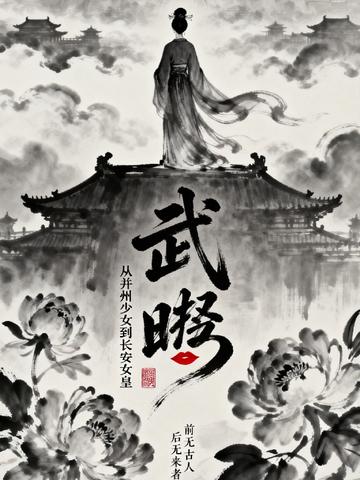
Synopsis: The Empress Wu Zetian
During the Zhenguan era of the Tang dynasty, Wu Zhao, the youngest daughter of Wushi Yue, governor of Bingzhou, was born. Her father named her "Zhao," meaning the sun and moon shining together, illuminating all things, as if fate itself had foretold her extraordinary life.
At fourteen, Wu Zhao entered the palace as a Cairen. The prosperous Zhenguan era, ushered in by Emperor Taizong Li Shimin, was approaching its height. Yet within the palace, thousands of women would spend their lives there, and most would grow old without ever seeing the emperor. How could an orphan, left without her father's protection, find her footing in the treacherous inner court?
From Taizong's Cairen to a nun at Ganye Temple, then to Gaozong's Zhaoyi and empress, and finally to the throne as emperor: Wu Zhao spent more than sixty years traversing a path unlike any before or since. As a woman, she broke through the barriers of a patriarchal society. With an iron fist, she carried on the glory of the Zhenguan era. With extraordinary talent and insight, she wrote the legend of a woman who became emperor in an age when men were considered superior to women.
Told from a distinctive female perspective, this novel reexamines the life of the only female emperor in Chinese history. It avoids sensationalism, playful distortion, and exaggerated palace intrigue, instead placing its characters in the tides of their time to portray a real, complex, and vivid Wu Zetian. From a girl in Bingzhou to an empress in Chang'an, from love to political maneuvering, from the imperial court to the hearts of the people: this is not only one woman's epic, but a portrait of an era.
In an age ruled by men, what price must a woman pay to stand against an entire realm? When she finally reaches the pinnacle of power and looks down upon all beneath her, has she achieved her heart's desire, or doomed herself to eternal ruin?