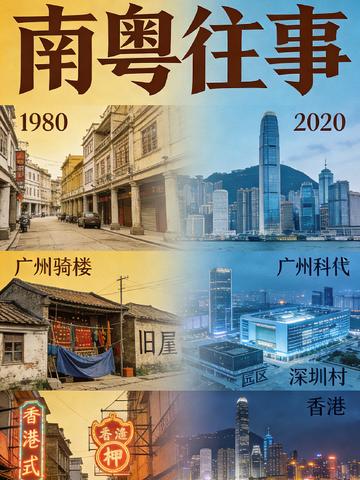
In the Flower City in 1980, the Soviet Union had not yet disintegrated, and the spring breeze had not yet reached the land of southern Guangdong. At this time, although Qiang was born in a humble background, he had a deep understanding of the situation and often encouraged himself: A person with a solid warehouse knows etiquette, and a person with sufficient food and clothing knows honor and disgrace. When he reached adulthood, he showed his sharp edge and was brave and fierce. He was elected as the village chief with a thunderous momentum. He single-handedly controlled the entire village's land and started the primitive accumulation of land occupation and rent collection.
Just as the spring breeze of talk in the south was blowing, he accurately stepped on the policy trend, let go of the private economy in towns and villages, and expanded rapidly by surrounding the cities with rural areas. Relying on the channels of the Canton Fair, he sold clothing, shoes and hats and other light industrial products overseas, earning his first pot of gold. In the early 1990s, he brought his industry to the Shenzhen Stock Exchange to ring the bell for listing, completing a complete transformation of capital.
1997 Coincided with the century-old changes in Hong Kong's return. He crossed the river and entered Hong Kong, completed a secondary listing through a backdoor scheme, and his business landscape continued to surge. At that time, Hong Kong's infrastructure construction was booming. He once again seized the dividends of the times, formed a deep alliance with the Hong Kong Council, and acted as a white glove behind the scenes. He became a game-changer in the field of Hong Kong's infrastructure construction. He left his presence everywhere in Hung Hom, West Kowloon, and Victoria.
With the implementation of the WTO and the advent of the era of large-scale infrastructure construction in the Mainland, the former rural ruthless people completely washed away their recklessness and transformed into Xiangjiang capital giants. They returned to Guangzhou in the name of patriotic overseas Chinese and were deeply involved in the development of Zhujiang New Town, Guangzhou University Town, Panyu, Nansha New Area and the construction of the Asian Games projects, and both power and wealth reached the top.
The establishment of the Guangzhou Institute in 2019 once again pushed the fifty-year-old man to a new peak in his career. At the age of 50, he was no longer the village tyrant he once was, but a top tycoon who could stand side by side with Jiacheng and talk and laugh happily.