History books say that he was a traitor, that he harmed the country and the people, and that he was as fearful of enemies as a tiger.
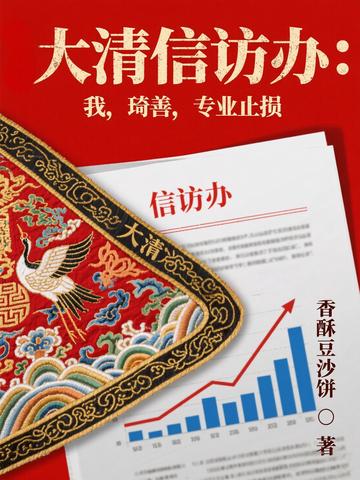
But no one told Chen Mo that the imperial envoy in 1840 was faced with a terrorist system with necrotic logic: the emperor wanted to ban smoking and not go to war, and the Ministry of Revenue had no military spending and wanted to send out surprise troops. Modern veterans of petitions have traveled through time, do not engage in dramatic counterattacks, and refuse to subvert wisdom and demonic reform. He replaced the sovereign buffer with tariff negotiations and used the comprador network to reverse infiltrate British businessmen. He dismantled all treaty clauses, loopholes in the official system, and repeated sacred wills into quantifiable interest games. This is not a cool expedition, but an "extreme pressure test" conducted in the cracks of officialdom. I am Qishan. I don't seek to turn the tide, I just want to give this nation a window of breathing space in the deadlock of institutional evolution!
Reader comments
The most amazing thing about this novel is that it seamlessly connects the two seemingly unrelated genres of "historical officialdom" and "science fiction suspense". At the beginning of the story, readers will think that this is just a cool novel in which the protagonist uses modern knowledge to "reduce dimensionality" in the officialdom of the late Qing Dynasty. However, with the emergence of the "shadow" organization, the story's plot suddenly escalated. "Shadows" are not ordinary foreign forces, but "observers" or "scavengers" who also have technology that transcends the times and can even intervene across dimensions. They regarded the late Qing Empire as a huge "social experiment field" and the protagonist was a "bug" that must be corrected. This setting instantly elevates the conflict of the story from the national level to the time and space level, and the sense of suspense and oppression also increases exponentially. Readers not only care about how the protagonist battles wits and courage with the British and Qingliu, but also how he fights against this incomprehensible enemy from a higher dimension. This bold attempt at genre fusion has greatly broadened the boundaries of historical time travel literature and brought an unprecedented reading experience.
The most amazing thing about this novel is that it seamlessly connects the two seemingly unrelated genres of "historical officialdom" and "science fiction suspense". At the beginning of the story, readers will think that this is just a cool novel in which the protagonist uses modern knowledge to "reduce dimensionality" in the officialdom of the late Qing Dynasty. However, with the emergence of the "shadow" organization, the story's plot suddenly escalated. "Shadows" are not ordinary foreign forces, but "observers" or "scavengers" who also have technology that transcends the times and can even intervene across dimensions. They regarded the late Qing Empire as a huge "social experiment field" and the protagonist was a "bug" that must be corrected. This setting instantly elevates the conflict of the story from the national level to the time and space level, and the sense of suspense and oppression also increases exponentially. Readers not only care about how the protagonist battles wits and courage with the British and Qingliu, but also how he fights against this incomprehensible enemy from a higher dimension. This bold attempt at genre fusion has greatly broadened the boundaries of historical time travel literature and brought an unprecedented reading experience.